Letitia Carson — High-School Edition
A Black Pioneer of Oregon — High-School Edition — By Bob Zybach. For readers about 12–15. 2026-06-20.
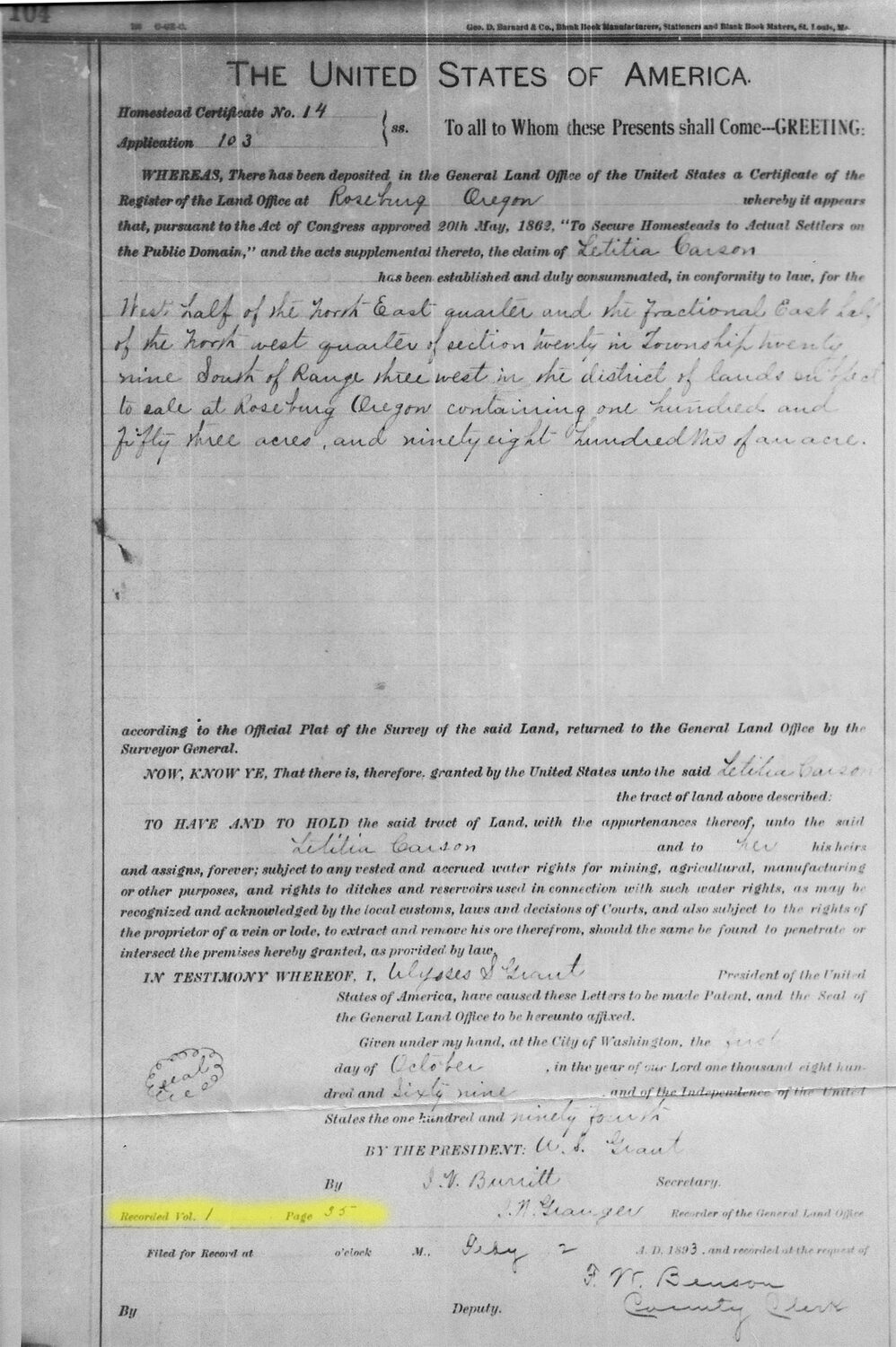
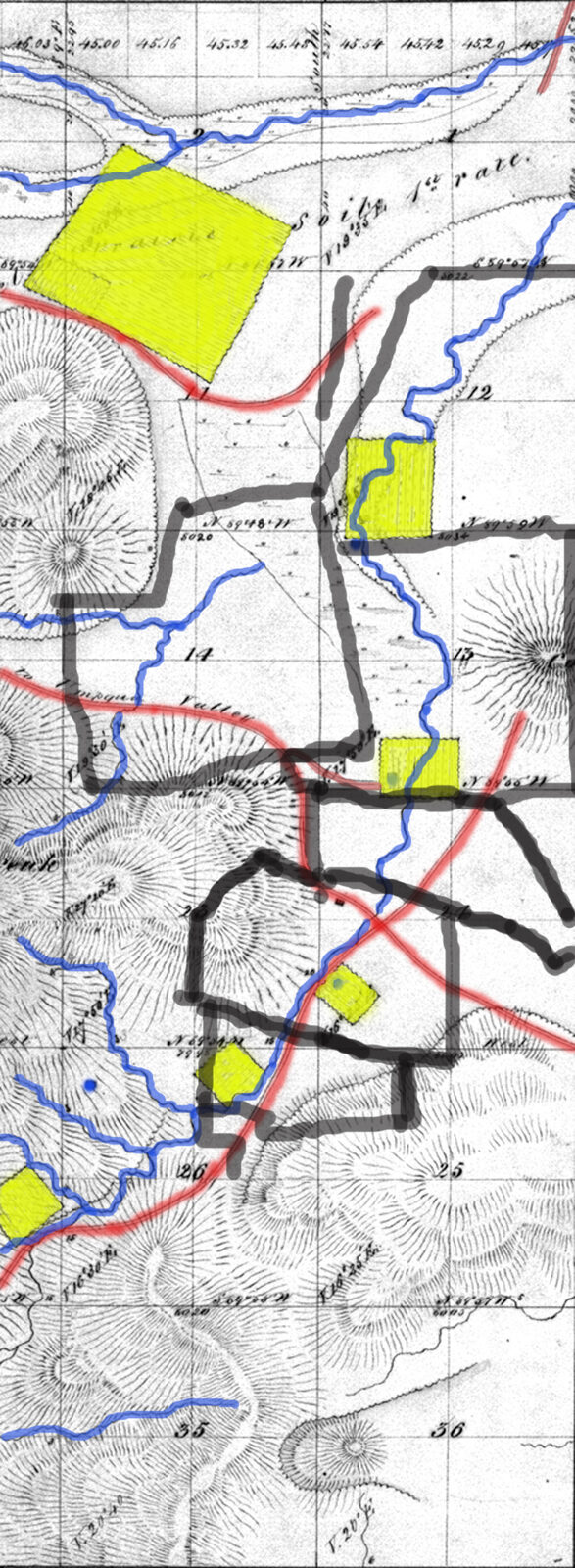
A few documents and images from Dr. Zybach’s Letitia Carson archive. The full set of figures will be placed chapter by chapter in a later draft.
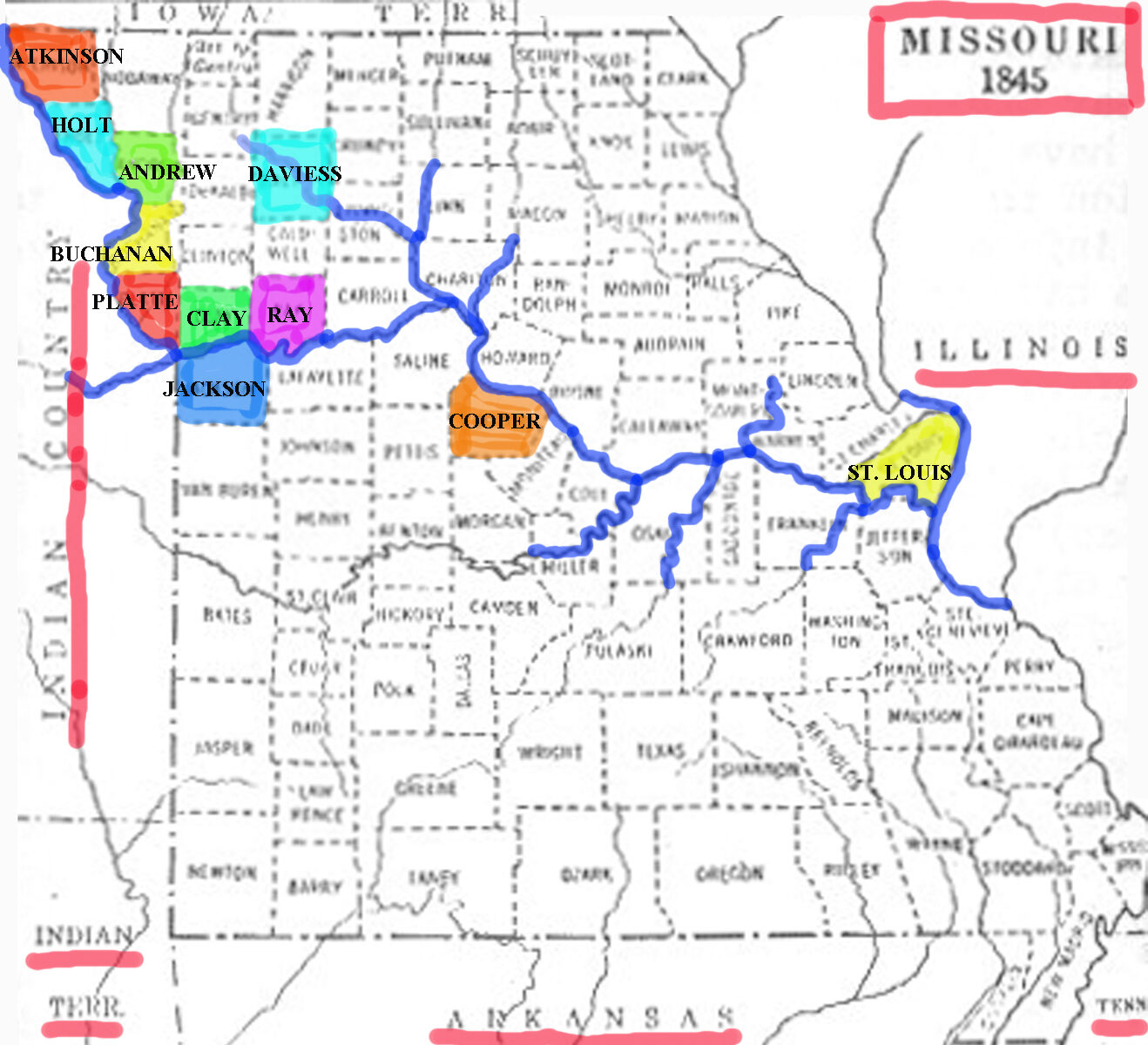
Chapter 1. Kentucky
The first thing to know about Letitia Carson’s childhood is that we do not know it.
She was born in Kentucky, almost certainly into slavery, sometime between about 1814 and 1818. After that, the record goes dark for nearly thirty years. There is no record of her parents. No record of her birth. No bill of sale, no church register, nothing that any document I have found will confirm. For most of her early life, Letitia simply does not appear in writing at all.
The first time she steps into the written record as a living, traveling person is in the spring of 1845. She is pregnant, far from Kentucky, on a wagon train rolling west out of Missouri and onto the Oregon Trail. Everything before that moment, we have to reconstruct from the outside — from a handful of hard facts, and from the well-documented history of the world she was born into.
So this chapter will be honest about what it can and cannot do. I will tell you plainly what the documents show. I will tell you plainly what they do not. And where I move from fact to careful guesswork, I will say so. The history of slavery in Kentucky is real history, deeply researched. None of it is about Letitia by name. All of it is the country she came from — and it is the closest we can get to her until she walks out of the silence.
The few things we know for sure
Let me set down the fixed points first, because everything else hangs on them.
Letitia’s birth year is given as a range — 1814 to 1818 — because the sources disagree, and not one of them is firsthand. The 1850 census of Benton County, Oregon, lists her age, and you can work a birth year backward from it. Later records give other figures. Her own family research, gathered over many years with the genealogist Janet Meranda, settles on about 1818, born in Kentucky.
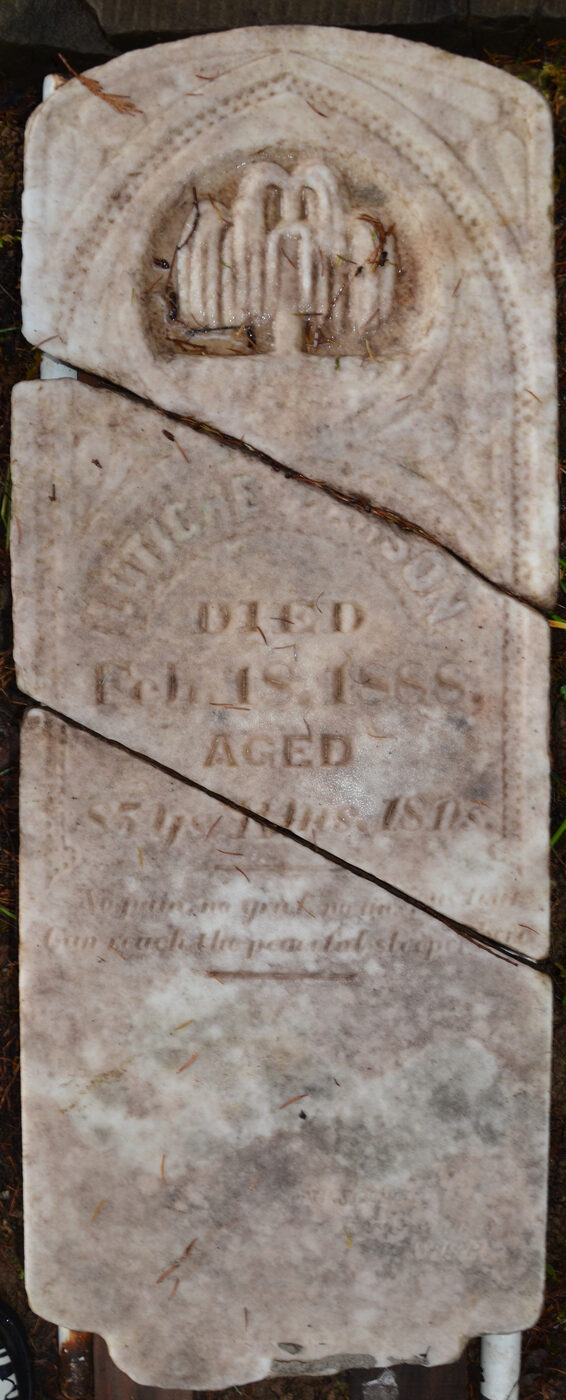
Even her name was never nailed down. Through the records she is “Letitia,” “Leticia,” and “Lutisha.” To the neighbors who knew her in old age, she was “Aunt Tish.” Her gravestone, in a pioneer cemetery in Douglas County, Oregon, where she was buried on February 18, 1888, misspells it as “Lutisha.” That misspelling, at the very end of her life, is a small reminder of how thin the written thread is — at the end, and even more so at the beginning.
Was she born enslaved? We have no bill of sale to prove it. But it is as close to certain as the evidence gets. She was a Black woman born in Kentucky in the 1810s, when almost every such person was held as property. When she reappears in 1845, she is traveling with a white man, David Carson, in circumstances that make the most sense if she had been enslaved and then freed. And years later, after Carson’s death, the man handling his estate would argue in open court that Letitia and her children had been Carson’s property. That argument only makes sense if Letitia had, at some earlier point, in fact been a slave. So I treat her birth into slavery as a fact — while telling you it rests on the weight of circumstance, not on a single naming document.
About David Carson, the record is kinder, and his life is the path Letitia walks out on, so he is worth a moment here. David Carson was born in County Antrim, in the north of Ireland, in 1800, and came to America as a young man. By 1840 he was farming in Missouri; soon after, he moved to the brand-new Platte County in the far northwest corner of the state, where he got himself 160 acres and a town lot in Platte City. He became an American citizen in October 1844. He was, in short, a settled, landowning farmer of about forty-five when, in the spring of 1845, he set out for Oregon with Letitia beside him. (David’s own story gets its own chapter; here he matters only as the man who first makes Letitia visible.)
The one fact that fixes Letitia in time more firmly than any other is the birth of her first child. On or about June 9, 1845, somewhere near the crossing of the South Platte River, Letitia gave birth on the trail to a daughter, Martha. From that day forward, Letitia Carson has a documented life. Everything in this chapter comes before that day — and so everything in this chapter is reconstruction.
The missing thirty years
Between her birth in Kentucky and her departure from Missouri lie roughly thirty years that no document I have found will fill. Here, careful guesswork has to do the work that evidence cannot — and the only fair way to guess is to anchor it in what is known about people in her situation.
When Letitia crossed the trail in 1845, she was carrying David Carson’s child, yet no earlier children appear for either of them in any record. She was somewhere between twenty-five and thirty years old. There is good reason to think Carson had bought or leased her before they left Missouri, though it is also possible she had become free and joined him by choice.
And there is a quiet, painful possibility folded into those years. A woman of her age, born and raised in slavery, may well have already borne children before Martha — children who, under slavery, would have belonged to her owner. They could have been kept, hired out, or sold away from her. If she did, no record of them survives. That blank is itself part of how slavery treated the families of enslaved women: it erased them.
So the questions that shape the rest of this chapter are not idle ones. What was an enslaved child’s life like in Kentucky in the early 1800s? How were enslaved people moved west toward Missouri? And how did Letitia come to be in Missouri at all, and under what conditions? I cannot answer any of these for Letitia herself. But I can describe the range of likely answers from the historical record — and that range is the most honest portrait of her early years that can be drawn right now.
Slavery in Kentucky
Kentucky entered the Union in 1792, carved out of the western lands of Virginia, and it carried Virginia’s slave law west with it. That matters: Kentucky slavery came from the English law of Virginia, not from the French laws that had once governed Louisiana and the country along the lower Mississippi. A child born enslaved in Kentucky around 1814 was born under law inherited from Virginia.
But Kentucky was not the kind of slave country the word “plantation” usually calls to mind. From 1790 to 1860, enslaved people were never much more than a quarter of the state’s population. The farms were generally smaller than the great cotton plantations of the Deep South, and most slaveholders owned only a few people — two or five, far more often than fifty. Plenty of Kentucky farms had no enslaved labor at all.
The farmers who did own the most people were the ones raising the crops that ate the most labor: tobacco, and above all hemp. The first Kentucky hemp crop was grown in 1775, and by 1810 hemp was the state’s leading crop. It was brutal work — cutting, soaking, breaking the stalks, dragging out the fiber — and it was rarely profitable anywhere else. Kentucky was the exception, and the reason was slavery. Enslaved hands processed Kentucky hemp into rope and bagging right up to the Civil War. The heaviest concentrations of slavery were around the cities of Louisville and Lexington and across the rich farmland of the central Bluegrass.
Where in all of this was Letitia? I cannot say. But the odds, plus a few clues from her later life, point in a particular direction. I think it more likely she was raised in a small household as a domestic servant — doing housework, gardening, dairying, minding children — than worked as a field hand on a big hemp or tobacco operation. That is a judgment about probability, not a finding of fact, and you should read it that way.
The road toward Missouri
If Letitia was born in Kentucky around 1814 and was in Missouri by 1845, then somewhere in between, she was moved — west and a little north, toward the Missouri River. How that happened is unrecorded for her. But the general machinery is one of the best-documented parts of American slavery, and it almost certainly explains her.
The 1820s and 1830s were the decades when Kentucky became one of the great exporting grounds of the domestic slave trade. After Congress banned the importing of enslaved people from abroad in 1808, the only way to feed the booming cotton frontier of the Deep South with labor was to move people already held inside the United States. The surplus came mostly from the upper South — Virginia, Maryland, and Kentucky. As Kentucky’s tobacco economy shrank after about 1830 and needed fewer hands, Kentucky owners sold people south in enormous numbers — on the order of seventy thousand human beings over the antebellum years. Most were carried to Alabama, Mississippi, and Louisiana, in what amounted to a second, internal middle passage.
But not every enslaved Kentuckian who was moved was sold to a Deep South trader. Many were simply carried along when their owners themselves pulled up and moved. From the 1820s onward, white families left Kentucky in large numbers for newer country — west to Missouri above all — and the slaveholding families among them took the people they owned with them. Missouri’s richest farm counties were settled exactly this way.
This is the more likely path for Letitia. She could have been sold to a trader or a Missouri buyer; she could have been carried west in the household of an owner who moved; she could have been moved more than once. Any of these would leave precisely the blank we find. I cannot tell you which it was. What I can tell you is that her passage from Kentucky to Missouri was an utterly ordinary event of its time, repeated tens of thousands of times — and that the silence around it is the silence the trade imposed on nearly everyone it moved.
What “household servant” really meant
I want to set down the reasoning behind my guess that Letitia was a household servant rather than a field hand, because it shapes how you should picture her growing up.
On the small holdings typical of Kentucky, enslaved people often lived in the same house as the family that owned them, or in a cabin a few steps away. Owner and slave lived and worked in close, constant, daily contact. That closeness was its own kind of burden — but it was a very different daily life from the gang labor of a big plantation. On the strength of that pattern, and the small scale of Kentucky slaveholding, I think it more likely that Letitia came up as a domestic — doing not just housework but gardening, milking, spinning, child-minding, the endless labor of keeping a household running — than as a child laborer in the fields.
What she later became backs this up, lightly. In her Oregon years, Letitia was known across her neighborhood as a midwife, a stock-raiser, and a capable, self-supporting farm woman. That is exactly the kind of competence a domestic upbringing builds. I do not push this further than it will go. It is a probability resting on a pattern.
But it is worth being clear-eyed about what even a “comfortable” household situation actually meant. An enslaved woman, however close to the family, was property. She could be sold to pay a debt, divided among heirs when her owner died, hired out by the year, or used by the men who owned her. Closeness to the owning family was not safety — it could be the opposite. Whatever the texture of Letitia’s childhood — and we do not know it — it unfolded inside that fact.
The hours that were their own
Whatever else slavery took, it could not entirely take the evenings, the Sundays, and the few holidays. In the slaveholding upper South, the rhythm of the week left enslaved people a sliver of time that was, in practice, partly their own — Saturday nights and Sundays above all, and the long Christmas break, when work slackened and visiting, music, courting, worship, and rest filled the hours.
One tradition is worth pausing on: “patting juba.” When drums were forbidden them, enslaved people made music with their own bodies — clapping hands, slapping thighs, stomping feet — building rhythm and dance out of nothing but themselves. It is a small, vivid thing, and it stands for a larger truth: inside the institution, people made lives, kept time, and held onto joy where they could. Letitia was a young woman in exactly these years and exactly this culture. I cannot put her at a particular Saturday-night gathering, but the culture of those gatherings was the air she breathed.
Her later life suggests a churchgoing woman, too, and the religious world of the enslaved upper South makes that easy to believe. Most enslaved Christians in Kentucky were Baptist or Methodist — the two churches that grew explosively across the frontier South in the revivals of the early 1800s. An enslaved woman might attend her owner’s church, seated apart; she might worship in a separate Black congregation; very often she did some of each. My best guess is that Letitia was a Baptist or a Methodist. That is conjecture, anchored in the religion of the time and place and in her own churchgoing later in life — and I mark it as conjecture.
Platte County, Missouri
Letitia’s reconstructed road ends, just before she steps into the written record, in Platte County, Missouri — David Carson’s county. So it is fitting to close there.
Platte County lay in the far northwest corner of Missouri, in a band of rich river-bottom land that people called “Little Dixie,” because it had been settled so thoroughly by upper-South families who brought their slaves and their crops north and west with them. It was new country in the early 1840s. The Kentuckians and others who poured in found that hemp and tobacco grew well in the Missouri bottoms, and enslaved labor did the work. In Platte County, roughly one person in four was enslaved. This was the society David Carson farmed in — and it was, in its economy and its origins, a transplanted piece of the very Kentucky world Letitia had been born into.
How exactly Letitia came to be with David Carson in Platte County — whether he bought her there, whether she came into the county already his, whether by 1845 she was enslaved or freed or something the law had no clean word for — I do not know, and I will not pretend to. What I can say is that the threads run together here. A woman born enslaved in Kentucky in the 1810s. The great westward churn of slavery that carried upper-South people and the people they owned toward Missouri. A Little Dixie county built by Kentuckians on hemp and slavery. And an Irish-born farmer about to risk everything on the Oregon Trail.
In the spring of 1845, those threads cross. Letitia steps out of the silence. And her documented life — the life this book can actually tell — begins on the road west, with a daughter born near the South Platte and a free square mile of Oregon still half a continent away.
Sources
This chapter is built on Bob Zybach’s own research into Letitia Carson’s origins, carried out over many years with the genealogist Janet Meranda. The facts specific to Letitia and David Carson come from that work: the family genealogical files (birth about 1818 in Kentucky; death February 18, 1888, in Douglas County; David Carson born 1800 in County Antrim, Ireland; Martha born June 9, 1845, on the Oregon Trail); Zybach’s published biography of Letitia Carson (BlackPast.org, 2015) and his article “The Search for Letitia Carson in Douglas County” (2014).
The general history of the world around Letitia — never claimed as fact about her personally — draws on standard accounts of slavery in Kentucky, the domestic slave trade out of the upper South, the lives and labor of enslaved women, and the settlement of Missouri’s “Little Dixie.” Useful starting points include Marion Lucas, A History of Blacks in Kentucky; Steven Deyle, Carry Me Back: The Domestic Slave Trade in American Life; Marie Jenkins Schwartz, Birthing a Slave: Motherhood and Medicine in the Antebellum South; and R. Douglas Hurt, Agriculture and Slavery in Missouri’s Little Dixie.
Chapter 2. Ireland
David Carson was Scotch-Irish.
It is an American word. The British and the Irish would have called him “Ulster-Scots.” Not every Scotch-Irish family had Scottish roots, but almost all of the Ulster Irish were Presbyterians — Protestants who governed their own churches through elected elders rather than through bishops. Behind that one label lies two centuries of war, religion, migration, and a cloth trade built on flax. And that history helps explain how a farmer from the north of Ireland ended up in Oregon in 1845 — with a Black common-law wife, a newborn daughter, and a free square mile of the best land in the Willamette Valley, chosen with his own eyes.
The Carson family lived in County Antrim, in the far north of Ireland, and they were almost certainly Presbyterians of Scottish stock. To understand them, you have to follow how a Lowland-Scots people came to live in Ireland at all, why generation after generation of them left for America, and how one Antrim family joined that long movement.
Almost none of this can be told from Carson family papers — the Carsons left hardly any behind. It is told instead from the wider record of the Ulster Scots, with the family’s thin paper trail folded in where it can be found. Where the record runs out and only guesswork remains, this chapter says so.
How the Scots came to Ulster
Before the 1600s, Ulster was the most stubbornly Gaelic and independent corner of Ireland — a country of local kings and cattle raids that had held off English rule longer than any other part of the island. That old order was broken in a war that ended in 1603, when the Gaelic chieftains of the north made their last great stand against England and lost. A few years later, in 1607, the leading Gaelic nobles fled the country for Europe rather than live under English law. Their departure left Ulster’s land legally open, and the English crown moved to fill it.
In 1609, King James I of England — who had also been King of Scotland — created the Plantation of Ulster. The plan was to settle the province with loyal Protestants and so “civilize” a region that was rural, Gaelic, and Catholic. The new colonists came mostly from Lowland Scotland and northern England. They had to speak English, be loyal to the king, and be Protestant. In return, they got farmland on very favorable terms.
The rules drew a hard line between the newcomers and the people already on the land. Catholic churches were handed over to the Protestant church. The new landowners were forbidden to hire Irish workers or to sell their land to Irish people. The whole point was to manufacture, on Irish soil, a self-contained Protestant society that owed everything to the crown and nothing to the Catholic Irish around it. Almost every town and village in the north dates from these plantation years — laid out, and often fortified, as garrisoned market towns to anchor the new settlement.
A century of war
A society built on taking other people’s land did not sit quietly.
In 1641, the Ulster Catholics rose in rebellion. They turned on the Protestant colonists, killing thousands outright and driving thousands more from their homes to die of cold and hunger on the roads. The memory of 1641 — exaggerated in the retelling, but real enough in its horror — would harden Protestant Ulster for two hundred years. A Scottish army came to put the rising down and committed its own atrocities in revenge. The fighting and the wars that followed dragged on for more than a decade. When it was over, the last of the great Catholic landowners of Ulster were gone, their estates parceled out among the victors. The land question in Ulster was now, permanently, a Protestant question.
Even as the wars raged, the migration from Scotland kept coming. A traveler through Scotland in 1634 described what he saw on the roads:
“Above the thousand persons have, within the last two years past, left the country wherein they lived… and are gone for Ireland. They have come by one hundred in company through the town, and three hundred have gone on hence together, shipped for Ireland at one tide.”
By 1640, perhaps 100,000 Scots had settled in Ulster, against only some 20,000 from England. The province was becoming, in its settled districts, more Scottish than English and more Presbyterian than Anglican — a fact that shaped everything that came after.
Then came the linen. In the 1680s, French Protestant refugees — the Huguenots, driven out of France for their religion — brought improved methods for making linen cloth from flax. This was a turning point. Linen would become the trade that defined Ulster for the next century and a half: flax grown in the field, spun and woven in the home, and sold into markets far beyond Ireland. It made the Ulster cottage prosperous. It also made it a target. When English merchants saw Ulster’s cloth trade growing, they got Parliament to choke it off for their own benefit — a pattern that would repeat, and that would, in the long run, push Ulster’s people toward yet another frontier.
The last great war in Ireland came at the end of the 1680s, when the Catholic King James II was overthrown in favor of his Protestant daughter Mary and her husband, William of Orange — “King Billy,” whose orange colors are still worn in his honor today. County Antrim, the Carsons’ country, was a center of Protestant resistance. The war turned on the siege of Derry and the Battle of the Boyne in 1690, and ended with the Protestant side victorious. Its lasting effect was to confirm British and Protestant rule over the whole island for more than two centuries — the political world within which every later Carson would be born, would farm, and would eventually decide to leave.
The wars had emptied the fields of Ulster, and a fresh appeal went out for settlers, with long farm leases held out as the bait. So came the last great wave of Scottish migration, in the 1690s — driven not just by the pull of Irish land but by a brutal famine in Scotland, remembered as the “Seven Ill Years,” when failed harvest followed failed harvest and people left because to stay was to starve. It was at this point that Scottish Presbyterians became the majority in Ulster. The province’s character was set: Protestant, Presbyterian, Scots in stock and speech, industrious in linen, and bound to a crown that did not entirely trust it.
The road out of Ireland
Numbers and prosperity did not buy the Ulster Scots security.
In 1704, a new law required everyone holding public office to take communion in the official Anglican church — a single stroke that all but shut Presbyterians out of public life in the north. A people who governed their own church by their own elders had been told, in law, that they were second-class subjects in the country their grandfathers had been invited to settle.
The economic squeeze came right behind. By about 1710, most of the farm leases granted to the settlers of the 1690s had run out, and landlords withheld new ones until tenants agreed to pay sharply higher rents — “rackrents,” people called them — that many simply could not meet. Rather than submit, whole communities, often led by their ministers, began to take ship for America. And by about 1707, the old differences among the settlers — Scots from English, Lowlander from Borderer — had largely dissolved into a single, distinct people. The folk who would soon pour into the American colonies were no longer Scots and were not English. They were Ulstermen, and they were about to become something else again.
The Great Migration from the north of Ireland to America began in 1717, and once it started, people came by whole congregations. Most left because of hard times at home — a severe drought from 1714 to 1719 had ruined crops, stunted the flax, and sickened the sheep, failing the whole cottage economy at once. In 1719, an Anglican archbishop in Dublin set down what he believed was the real cause, and was careful to correct anyone who blamed religion alone:
“The truth is this: after the Revolution, most of the kingdom was waste… the landlords therefore were glad to get tenants at any rate, and let their lands at very easy rents; they invited abundance of people to come over here, especially from Scotland… but now their leases are expired, and they are obliged not only to give what they paid before… but in most places double and in many places treble, so that it is impossible for people to live or subsist on their farms.”
It came from an Anglican churchman, not a Presbyterian partisan: the people were not chiefly fleeing the bishops. They were fleeing the rent.
Between 1717 and 1775, nearly a quarter of a million people left Ulster for America — the largest single group of immigrants from Britain and Ireland in the years before the Revolution. They landed first in Pennsylvania and western Virginia, and from there pushed southwest into the backcountry of the upland South: the valleys of the Carolinas, the Appalachian Mountains, on toward Tennessee. Many came as indentured servants, bound to work for a colonial master for several years to pay off their passage.
It was in America that the name was made. To the older English settlers of the colonies, these newcomers were simply “Irish.” To correct that, the newcomers reached back for the older word — “Scots” — and in the trade a new breed took its name: the Scotch-Irish. They had lived for generations on a frontier in Ireland, and it felt natural to push on to a new one. They were tough, restless, and distrustful of all authority and government, and they took hold of the western edge of American settlement. One historian described the resulting type — a man who planted his corn and mowed his grass with a long rifle “placed ready and loaded against a handy stump,” clothing his family with what flax and sheep he could protect from the wolves.
When the Revolution came in 1775, the Scotch-Irish were among its most determined supporters. George Washington is said to have remarked that if the cause were lost everywhere else, he would make his last stand among the Scotch-Irish of his native Virginia. The line that runs from the Antrim rackrent to the Tennessee frontier rifle is a real one — and David Carson was born squarely upon it.
Antrim, and the temper of the age
By the end of the 1700s, County Antrim was the heart of Ireland’s linen country, and Belfast — its commercial capital — was one of the most outward-looking towns in Ireland. Antrim was also overwhelmingly Protestant. In 1756, Belfast held nearly 8,000 Protestants and only about 550 Catholics.
That had a curious effect. With so little to fear from their few Catholic neighbors, the reformers of Belfast could afford to think about justice for Catholics in the abstract — and increasingly, they did. Belfast was a reading, arguing, reforming town, and when revolution broke out in France in 1789, Ulster did not watch it as a distant show. Thomas Paine’s The Rights of Man was hailed there with such enthusiasm that one leader called it “the Koran of Belfast.”
Out of that ferment came the most ambitious political movement Ireland had yet seen. In 1791, a group of reformers founded the Society of United Irishmen in Belfast. Their aim was radical for the age: to unite Irishmen of every religion — Protestant, Catholic, and Dissenter alike — in a common demand for reform, and soon, for an Irish republic independent of Britain. By the middle of the decade, the United Irishmen had become a mass revolutionary movement, drilling in secret and looking to France for help.
That help came too late and too little. When the rising finally broke out in 1798, County Antrim saw real fighting. The rebellion was crushed across Ulster with great loss of life and harsh reprisals; its leaders were hanged or died in prison. But the temper the rising revealed — independent, reform-minded, impatient with landlords and bishops alike, willing to think about rights for people of every creed — was very much the temper of the Presbyterian north. It was the temper of the people who were already leaving for America, and who kept leaving after the rising was put down. The Carsons came out of that country, in those years. Whatever their own politics, they were formed by a society that had just risked everything on the idea that a person’s rights should not depend on their church.
The Carson family leaves Antrim
David Carson was born to a large family, probably Presbyterian, in County Antrim in 1800. By the family record — pieced together from census, land, marriage, and burial documents — he was one of eight sons of James Carson and Margaret Smith Carson, with one younger sister. Most of his brothers raised large families of their own.
The Carsons did not all cross the Atlantic at once. The two oldest brothers, James and William, appear to have come earliest, around 1804, and to have prospered — William became a wealthy businessman in Charlotte, North Carolina. Several of the remaining brothers made the crossing in 1818, the year the family remembers as the great Carson emigration, many of them bringing wives married in Antrim and children born in Ireland.
It is that 1818 group, with their families, that the family tradition calls the “Seven Carsons” — the brothers and their sister Jane — who left County Antrim that year for the Appalachian Mountains of America. Most of them settled for good in the mountains of western North Carolina, or just across the line in Virginia — thin-soiled backcountry of exactly the kind their forebears had taken up a century before, far from markets and well suited to a people used to making their own way.
David was the brother who did not settle. By family and local memory, he was the restless one — the “Uncle Davy” who kept moving west, out of the mountains and on toward Missouri, and at last onto the Oregon Trail.
Why so many Carsons left Antrim within a single generation, and the years that carried David from the North Carolina mountains to a Missouri farm and finally onto the trail to Oregon — those belong to the chapter that follows. What this chapter has tried to establish is the world they came from: a Lowland-Scots, Presbyterian, linen-working Ulster, planted by an English crown that never wholly trusted it, hardened by a century of war, schooled in the language of rights by its own near-revolution, and long practiced in the one solution to bad leases and bad harvests that its people knew best — to take ship for a new frontier and begin again.
Sources
This chapter rests on Bob Zybach’s “Ireland” chapter draft and his Carson family research file, compiled from census, land, marriage, and burial records (Ancestry.com, Find-a-Grave, the Oregon Secretary of State’s Early Oregonians Database, and other sources). That work supplies the Carson family facts: David’s birth in County Antrim in 1800; his parents, James and Margaret Smith Carson; the eight brothers and their staggered emigration; and the 1818 crossing of the “Seven Carsons” to the Appalachian backcountry.
The wider history of Ulster and the Scotch-Irish migration draws on standard accounts — for the general narrative, Jonathan Bardon, A History of Ulster, and James G. Leyburn, The Scotch-Irish: A Social History. The 1634 traveler’s account, the 1719 letter from the Archbishop of Dublin, and the description of the Scotch-Irish frontiersman are quoted as they appear in Zybach’s draft; the Belfast population figures and the founding of the United Irishmen are drawn from histories of late-eighteenth-century Belfast.
A note on the name “Smith”: in this chapter, “Smith” means the Carson family — Margaret Smith Carson, David’s mother, and the brother named for her, Smith Carson. This is not Greenberry Smith, who appears in later chapters, and not the explorer Jedediah Smith.
Chapter 3. Missouri
Missouri is where the record finally catches up with Letitia Carson — not by name yet, but through the man whose household she would share, whose child she would carry, and whose surname she would keep for the rest of her life.
For David Carson, Missouri is where a long-roving Irishman finally stopped roving. He took up a square of frontier ground, paid for a town lot, lent his neighbors money, served his county, and — at the age of forty-four — at last swore himself an American citizen. The two lives, his and Letitia’s, ran side by side through the 1840s in Platte County, in the far northwest corner of the state. And somewhere in those years, they joined. Exactly when, and on exactly what terms, the record does not say. That silence is itself part of the story.
Here is what we can say for certain. By the late 1830s, David Carson was living on the Missouri frontier. In December 1841 he bought a lot in the brand-new county seat of Platte City. Through these years he turns up again and again in the county’s court papers — as a man who lent money, a man chasing what he was owed, a freighter hauling goods up the Missouri River. In April 1843, he hired a young enslaved girl for a year, and that fall he stood trial over how he had treated her. On October 21, 1844, in the same courthouse and the same court term, he became a United States citizen. And by Christmas of that year, he was living with Letitia, and she was carrying his child. The following spring, the two of them set out for Oregon.
But before any of those facts, comes the country itself — because David Carson did not settle just any patch of Missouri.
A brand-new corner of a slave state
When David Carson came to it, the northwest corner of Missouri was the newest American ground in the state. So new, in fact, that it had been Indian country, by treaty, within living memory of every adult on it.
It was good land — bottomland along the river, rolling prairie behind it — and Missourians wanted it. In 1836, at Fort Leavenworth, the United States made a treaty with the Ioway, the Sauk, and the Meskwaki, by which those tribes gave up the wedge of land — some 3,000 square miles — and agreed to move west of the Missouri River. Within a year, white settlers were pouring in. This whole stretch became known as the Platte Purchase, and at first it was all one new county: Platte.
Two things about the Platte Purchase matter for the people in this book.
The first is that it was a removal. The land David Carson would farm had belonged, by the United States’ own treaty law, to the Ioway, the Sauk, and the Meskwaki until the year before white settlers were allowed onto it. By the time David appears in the records, the tribes had been pushed across the river.
The second is that the Platte Purchase carried slavery across a line that was supposed to stop it. Back in 1820, the Missouri Compromise had drawn a line across the country: slavery was allowed in Missouri, but barred in the rest of the western territory north of a certain latitude. The Platte Purchase lay north of that line. But because it was being added to Missouri — an existing slave state — rather than organized as fresh territory, slavery slipped in by a legal side door. David Carson came to a slave country, and it was slave country precisely because the law that should have kept it free had been worked around. Letitia would feel the weight of that fact far more than he ever would.
A man with money
David Carson arrived in the middle of the worst economic depression the young country had yet known. The Panic of 1837 had dried up credit, collapsed land prices, and left a great deal of debt that could not be paid.
The court records show exactly what kind of man David was in that tight market: a creditor, not a debtor. In one case, he came to court holding a five-hundred-dollar bond — money four men owed him, at ten percent interest. A man who can put five hundred dollars out on loan in the depth of a depression is a man with money to spare, and one his neighbors came to when they needed it.
He was also a man of commerce. The earliest court paper we have for him, from 1839, shows a freight company suing him over a small disputed bill — and the bill itself reveals his business. He had been moving goods up the Missouri River: groceries, supplies, a barrel of flour, hauled the long miles from St. Louis to the landings near his Platte County home. He fought the suit and won. He was a frontier merchant as well as a farmer and a lender. The man who would later choose, with evident care, one of the best square miles in the whole Willamette Valley was a man who understood markets, freight, and money.
In December 1841, he bought his lot in the new town of Platte City — seventy dollars, paid in hand, the deed running to his “heirs and assigns forever.” His farm lay outside the town: a quarter-section, 160 acres, in the river country south and west of Platte City. A hundred and sixty acres was the standard unit of frontier ownership — the same square he would later reproduce, doubled, in his Oregon claim.
But one thing is missing from all of it. There is no wife, and no children, anywhere in David Carson’s Missouri record. When his estate was finally settled years later, his heirs turned out to be his brothers, his sister, and their children — and, the man handling the estate noted with some surprise, no one else. “Since there is no mention of a wife or children,” he wrote, “we can safely assume that David was a bachelor.” That single negative fact is one of the most important in this book. In the eyes of Missouri law and his own family, David Carson went to Oregon a single man. Whatever Letitia was to him, the State of Missouri never recorded her as his wife — and, as we will see, it could not have, even if he had wished it.
Why hemp made Missouri so dangerous for Letitia
To understand how precarious Letitia’s life in Missouri really was, you have to understand what made Platte County’s slavery so valuable. The answer is hemp.
Platte County in the 1840s and 1850s was on its way to becoming, in the words of its own historian, the leading hemp-producing county in the world. And hemp could only be cleaned by a back-breaking hand tool called the hand-brake — labor so brutal that it was got, profitably, only from enslaved people. The county’s historian put the brutal logic plainly: hemp was the money crop; the labor was savage; “Negroes were, therefore, in demand, and stout men sold readily for $1,200 to $1,400.” When slavery ended, the historian noted, the hemp industry collapsed with it — proof, written in the county’s own ledgers, that the whole enterprise had rested on forced labor.
What did that mean for a woman like Letitia? It is best measured the cold way a slaveholder would have measured it — in dollars. In the 1850s, by the era’s going prices, Letitia herself would have been valued at something like seven hundred and fifty to nine hundred dollars; her daughter Martha at perhaps several hundred more; her son at a few hundred more again. Together, the family would have been “worth” well over a thousand dollars. The exact figures are estimates. The point is not the precise number. The point is that in Missouri, Letitia and her children were not a family. They were inventory — and valuable inventory, in a county where hemp money kept the price of human beings high.
A law that erased them
The legal world that governed any relationship between a white man like David Carson and a Black woman like Letitia is the reason the central fact of their Missouri years — how they came to be together — is missing from the record, and could only have been missing.
Missouri’s slave code, the State Archives note, “made no distinction between slaves and other personal property.” It forbade the enslaved to leave their owner’s land without a written pass, to carry weapons, to own property, or to gather. And it bore down on free Black people nearly as hard. A law of 1825 barred any “free negro or mulatto” who was not a citizen of another state from even settling in Missouri “under any pretext whatever.” In the very legislative session of 1844 to 1845 — just as David Carson was becoming a citizen and getting ready to leave — the state added new fines and punishments for any free Black person who could not produce papers and would not leave.
Two parts of that law reach straight into the Carson story.
The first: Missouri law would not recognize — and in fact forbade — the very thing David and Letitia became. There could be no legal marriage between a white man and a Black woman, no public, recorded union. This is why David Carson’s estate papers show him a bachelor with no wife. It is not that the relationship did not exist. It is that Missouri law gave it no name and no record at all.
The second: Letitia’s very presence in Missouri was legally precarious, no matter her status. If she was enslaved, she was property, governed by the whole machinery above. If she was free, she was — under the 1825 law — forbidden to settle in the state at all, and liable to fines, jail, and the lash if she stayed. There was, in short, no safe footing for a Black woman in Platte County in 1844, in bondage or out of it. That fact will matter enormously when we come to the decision to leave.
The hardest document: Carson and Ann Eliza
If the deed and the bond show David Carson prospering, one surviving lawsuit shows him at his worst — and it is the hardest document in his entire Missouri file. I am going to set it out plainly, because softening it would betray the record.
On the first of April, 1843, David Carson hired an enslaved girl for one year. Her name was Ann Eliza. The court papers variously call her thirteen, fourteen, fifteen, or sixteen; the defendants’ own witness put her at “about 13 or 14 years old.” Her owner was a woman named Susannah White. The contract Carson signed bound him to clothe the girl and to treat her “humanely” — the ordinary humane-treatment clause of such an agreement, the very promise the law of slavery made and almost never kept.
He broke it. In January 1844, Ann Eliza left Carson and went back to the Whites. When Carson sent a man to demand her return under the contract, the Whites refused — and the reason they gave is as plain as it is terrible. They pointed to a scar on the girl’s face, about two inches long, which they said Carson had inflicted, and which looked as though it had been made by a stone or a club.
Carson sued anyway, treating the girl, as the law did, as property wrongfully kept from him. In their defense, the Whites prepared to prove that Carson had not only beaten this child but had sexually abused her while she was in his service.
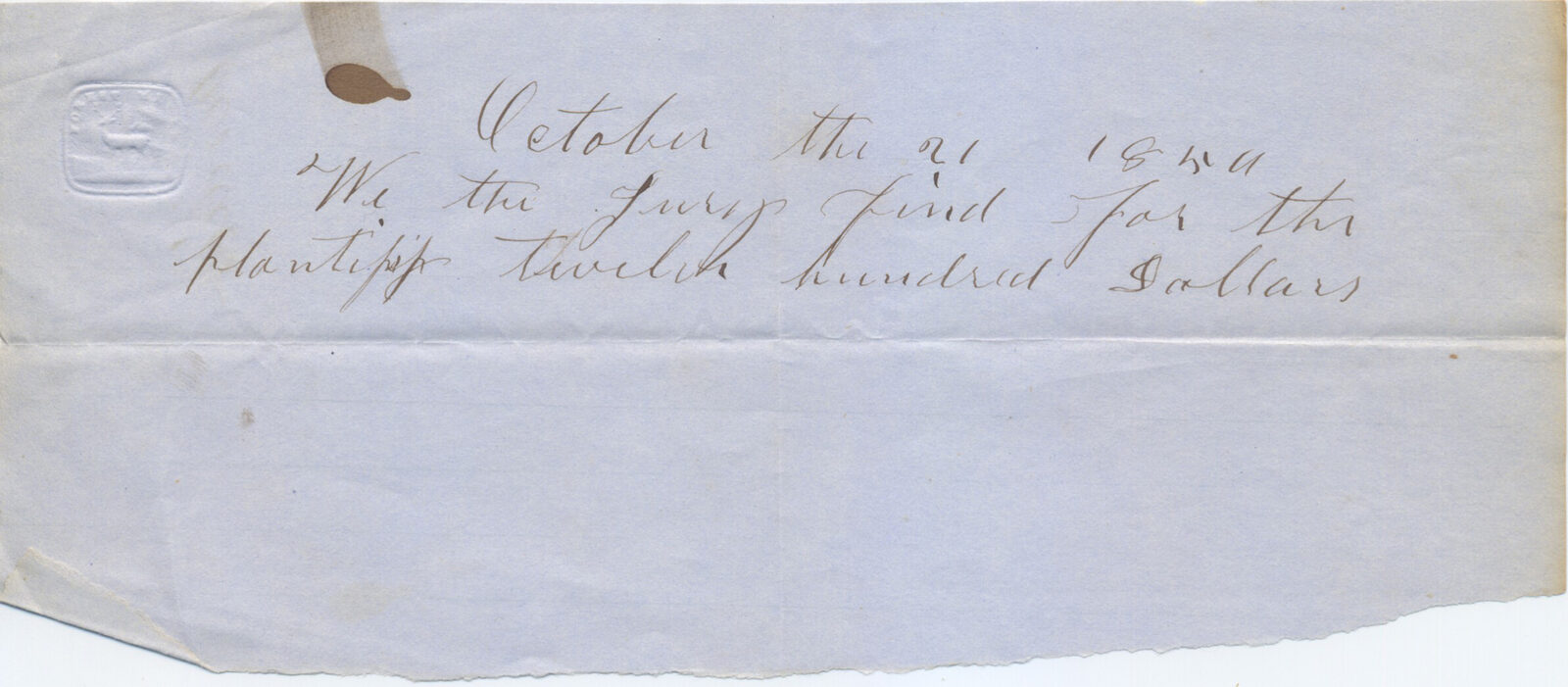
They were never allowed to prove it. Here the case becomes a study in how Missouri law protected the man and not the child. Carson’s lawyer objected to the Whites’ evidence of cruelty and abuse, and the court agreed — the testimony was thrown out, kept from the jury entirely. With the evidence of his abuse excluded, the outcome was never in doubt. In October 1844, the jury found for Carson. But they awarded him damages of exactly one cent — a verdict that suggests twelve men who did not much care for him, even as the law forced them to rule in his favor.
David Carson won. The contract promising he would treat the girl humanely was enforced in his favor, while the evidence that he had violated it was kept from the jurors’ ears.
I will not pretend to know more than the record holds. What the documents establish is this: David Carson hired a girl of thirteen or fourteen; her owner returned her bearing a two-inch scar that she attributed to Carson; the owners were prepared to testify to cruelty and abuse; the court excluded that testimony; and Carson prevailed. The documents do not let us hear Ann Eliza, whose voice the law silenced as a matter of course. What they do show, beyond argument, is the shape of the thing: a powerful man, the machinery of a slave court, and a child who could neither speak for herself nor be heard through others. It does not put David Carson in a good light. I do not think the surface is misleading.
Two questions hang over this case, and I would rather leave them open in your mind than pretend them away. Was Letitia ever connected to the White family? And was she in any way related to Ann Eliza? The timing is striking: Carson is abusing one young enslaved woman in early 1844 and, by the end of that same year, living with another, Letitia. Whether there is any link, or whether the two situations merely sat side by side in the same small slaveholding world, I do not know. Research is still under way. I raise the questions because they are real — and because any reader who has just read this case will ask them.
The year everything changed: 1844
The year that began with the Ann Eliza lawsuit went on to be the most eventful of David Carson’s life.
In the late spring of 1844, the Missouri River rose to the greatest flood ever recorded on it. Weeks of heavy rain swelled the river until the bottomlands — the richest farm ground in the Platte country, and the very kind David Carson worked — went under. An army officer marching up the valley that fall described a country still in ruins, where “houses, stock, fences, crops and everything else, were in hundreds of instances swept away,” and families had fled to the high ground “saving hardly anything but life.” There is good reason to think the flood, and the sickness that came with high water, weighed on David Carson’s decision to leave. A man whose bottomland farm had been buried in sand had concrete reason to look west.
And west was very much in the air. By the early 1840s, “the Oregon question” was everywhere in American politics. The Oregon Country was held jointly by the United States and Great Britain, and the demand to take it for the United States was rising toward a fever pitch. More immediately, the road itself had just been proven. In 1843, the first great overland migration to Oregon set out from western Missouri — about a thousand emigrants who showed that wagons could be got the whole way to the Columbia. The jumping-off towns for that migration were all within a few days’ travel of Platte County. David Carson watched the Oregon emigration form up, quite literally, in his own corner of the state.
In the middle of all of it — the lawsuit just decided, the farm wrecked, the Oregon fever rising — David Carson did a deliberate thing. On October 21, 1844, in the Platte County courthouse, before the same judge who had just heard the Ann Eliza case, he became a citizen of the United States. He swore to support the Constitution and renounced “forever all allegiance and fidelity” to any foreign power, “and more particularly to Victoria, Queen of Great Britain and Ireland, of whom he was heretofore a subject.”
The act was not idle. Citizenship was the key to land. Under the land laws that Oregon settlers were already anticipating, only a citizen could claim the free acres of the Willamette Valley. A man planning to go to Oregon and take up land needed exactly the paper David Carson obtained that October. Read against the Oregon fever and the wrecked farm, his naturalization looks less like sentiment than like the first concrete step of an emigration already decided on. He squared himself with the law, made himself eligible for the land, and prepared to go.
The decision to leave
By Christmas of 1844, the strands of David Carson’s life had drawn together into a single knot — and at the center of it was Letitia.
The sequence of that year runs like this: in January, the rupture with the Whites over Ann Eliza; in late spring, the Great Flood; in October, within days of each other, the verdict in the lawsuit and the oath of citizenship; and by Christmas, David Carson was living with Letitia, and she was pregnant with his child. The child was Martha, who would be born on the Oregon Trail the following summer.
Here we reach the question that hangs over the whole chapter, and it cannot be fully resolved: Had Letitia become free by that time? Was she a runaway, or leased, or owned by David? Those questions have never been answered. There is good reason to think David had bought or leased her before they left; the possibility that she had become free and chosen to join him cannot be ruled out. The records that would settle it have never been found, and given the law’s refusal to recognize their relationship at all, they may never have existed in any form that survived.
What the law does let us say with confidence is why leaving mattered so much, whatever Letitia’s exact status. If she was enslaved, she was property — salable, in a hemp county at the top of the slave market, for a great deal of money. If she was free, she was an unlawful resident, subject to fine, jail, and the lash. Either way, the child she was carrying inherited her condition: under slave law, a child followed the status of its mother. A child born to an enslaved Letitia in Missouri would be born a slave, no matter who its father was. A white father gave such a child nothing — not freedom, not his name, not a claim on his estate.
That is the measure of what the road west meant. Oregon was no paradise of equality — its own government was even then passing laws to keep Black people out, and Letitia would one day have to fight for what was hers in an Oregon courtroom. But Oregon was not Missouri. It was not a place where the price of human beings rode a hemp boom, not a place where an enslaved woman’s children were born into someone else’s ledger. For Letitia, the decision to set out in the spring of 1845 — pregnant, attached to a man the law would not let her marry, bound for a country two thousand miles off — was, whatever its terms and whoever made it, a decision that carried her and her unborn child off the auction block and toward the one place where she might, in time, stand before a court as a person rather than as property.
In the spring of 1845, David Carson sold or left behind what he had built in Platte County and joined the Oregon emigration forming up at the Missouri landings. With him went Letitia, carrying Martha. They were on the Oregon Trail. What happened to them on it — the birth of Martha along the way, the long road to the Willamette, and the country they were going to — belongs to the chapter that follows.
Sources
The backbone of this chapter is Bob Zybach’s “Missouri” chapter draft and the original Platte County, Missouri, court records he and his co-researchers transcribed: David Carson’s 1841 Platte City land deed; the 1843 hiring contract and the 1844 lawsuit Carson vs. White over the enslaved girl Ann Eliza (including the bill of exceptions describing the two-inch scar and the excluded testimony, and the one-cent verdict); Carson’s October 21, 1844, oath of citizenship; the $500 bond suit; the 1839 freight suit; and the probate file that records David Carson as a bachelor and fixes his 160-acre farm.
The slavery-and-hemp analysis draws on William M. Paxton, Annals of Platte County, Missouri (1897), for the patrol record and the “banner hemp county of the world” passage, and on Harrison A. Trexler, Slavery in Missouri, 1804–1865 (1914), for the era’s slave values. Missouri’s slave and exclusion laws come from Missouri’s Early Slave Laws: A History in Documents (Missouri State Archives). The 1844 flood is described from the journal of Captain James Henry Carleton. Background on the Platte Purchase treaty (1836–1837) and the 1843 and 1845 Oregon emigrations comes from standard accounts.
A note on the name “Smith”: the only Smith in this chapter is Greenberry Smith, named once as Letitia’s future Oregon adversary. He is not the explorer Jedediah Smith.
Chapter 4. The Oregon Trail
In the spring of 1845, almost the only thing the record will tell us about David Carson on the way to Oregon is that he once paid a fifty-cent fine for skipping his turn at guard duty.
The captain’s book of his wagon train noted it on May 20, west of the Missouri River. It is one of only two or three times his name appears in the day-to-day record of the whole crossing. And the woman traveling in his wagon — pregnant when they set out, and a mother before they reached the mountains — appears in that record exactly once, and not by name. She is “a woman.”
This chapter follows David and Letitia Carson across the Oregon Trail in one of its largest years. It is, of necessity, a story told mostly from the outside. Letitia could not read or write and left no diary; David, so far as we know, left none either. To reconstruct their crossing, we have to borrow the eyes of the literate travelers around them, find the Carson wagon as best we can within the long column of trains, and read the silences as carefully as the words. Most of the journal-keepers of 1845 were white men, and Letitia is nearly invisible in their pages. So this is her crossing seen through other people’s records, with the gaps marked as gaps.
Oregon Fever
“Oregon Fever” was the name people gave, in the early 1840s, to the rising eagerness of Americans to pull up stakes and head for the Willamette Valley — there to claim “free land,” millions of acres of fine soil and grazing range, with, in the boosters’ telling, good weather, no hostile natives, and no disease. It was an exaggeration on every count, but it moved thousands of families.
What turned a trappers’ and missionaries’ road into an emigrants’ highway was a single, spreading conviction: that an ordinary farm family with a wagon, a team, and the nerve to make the crossing could claim a square mile of the best land on the continent and owe nothing for it but the journey.
The political ground was shifting too, and that mattered to the Carsons more than to most. In 1845 the Oregon Country was held jointly by Britain and the United States, its ownership unsettled, its interior still home to the many Native nations who had lived there for generations. The American settlers already in the Willamette Valley had organized a provisional government, and it set the prize: a square mile — 640 acres — to an adult white male who would settle and improve it.
For David Carson, the arithmetic was plain. The land he already held in Missouri was bought and paid for. The land in Oregon was free, four times as large, and his for the taking — if he could get a family onto it. He had become an American citizen only in October 1844. Within months, he was on his way to claim what that citizenship had just made possible.
How they came to go together
The hardest question about the Carsons’ crossing is the first one: how did David and Letitia come to make it together? The honest answer is that we do not know. The record will not be pushed past guesswork here, so I will set out the two readings the evidence allows and let you weigh them, as I have had to.
The first reading is that David and Letitia formed a real attachment and chose to travel west together, where their child would be born free and David would provide for the family on his own free land. If they were ever married, it would most likely have happened on the trail, before the child was born, with a Presbyterian minister traveling in the same company to read the vows. But a marriage would have carried a heavy cost. To most of their traveling companions — drawn from the slaveholding counties of Missouri — an owner-and-slave relationship was ordinary and unremarkable, while an open marriage between a white man and a Black woman was, in their judgment, illegal, sinful, or both. That cost is itself a clue. It helps explain why nothing was written down.
The second reading is plainer and asks less of the heart: that the arrangement was a matter of mutual convenience. David wanted free land and the labor to work it; Letitia wanted freedom for herself and her child and a way out of Missouri; each could give the other what was wanted. They would go west, see how things stood, and decide later whether the relationship would continue.
The two readings are not as far apart as they first seem, and the law of the road did some of the deciding for them. What can be said for certain is that they went, that Letitia went pregnant, and that whatever their bargain was, the crossing itself changed its terms.
“Once free, always free”
For a slaveholding traveler in 1845, the road to Oregon held a legal trap that an antislavery traveler never had to think about.
To reach the trailhead, a traveler crossed the Missouri River out of the state of Missouri and onto federal ground to the west — Indian Territory, where slavery was not permitted. And there was, at that time, a settled understanding of Missouri law: a slave taken voluntarily by an owner onto free soil became free, and stayed free. People put it in four words: “once free, always free.” It was the very principle that would later be argued all the way to the Supreme Court in the Dred Scott case — and lost. But in 1845, it was the working law of the border.
The Carson wagon was ferried across the Missouri with the rest of its company. At the moment that ferry touched the western bank, Letitia — by that understanding of the law — became a free person, whatever her status had been the day before. It is even possible she had become, in the legal sense, a runaway: if her owner was someone other than David, then carrying her across that line put her beyond his reach, and now she was a member of the Carson wagon, on free ground.
This is not a small point, and it is not a sentimental one. It is the legal hinge on which Letitia Carson’s whole later life would turn. Nine years afterward, when she sued David’s estate, the defense would be that she had been David’s slave the entire time, in Oregon as in Missouri, and so was owed nothing. Letitia’s answer — and the jury’s — would rest on what the crossing had done. The complaint her lawyer drew up in 1854 fixed the change to the road itself: the agreement between them, it said, was made in 1845 “while on the road from the state of Missouri to the territory of Oregon and after he had passed the state line.” After the state line. On free soil. The phrase was not an accident. The crossing made Letitia free in fact in the spring of 1845 — and a decade later, an Oregon jury would be asked to make that freedom good in law.
“And a woman”
The trip officially began at the “jumping-off” places along the Missouri River, where the emigrants gathered, elected their officers, drafted rules of the road, and waited for the prairie grass to come up enough to feed the stock. David Carson and several of his Platte County neighbors fell in with the company organized by Solomon Tetherow.
It is in the enrollment census of that company that Letitia Carson enters the written record of the United States. The wagon-train census set down what David Carson was bringing to Oregon, item by item. He traveled, it records, with one wagon, one cow, eight oxen, two horses, four guns, six hundred pounds of bacon, six hundred pounds of flour, three men — and one woman.
That woman was Letitia.
The line deserves to be read slowly, because of what it is and what it is not. It is an inventory. The clerk who wrote it was counting up a wagon’s worth of property, provisions, and manpower for a four-month march across a continent — the wagon, the oxen to pull it, the cow for milk, the horses to ride, the guns, the bacon, the flour, the men to drive and guard. And then, at the end of that column of livestock and weapons and food, with no name and no further notice: “a woman.” She is listed the way the oxen are listed. Whatever the bargain between her and David, whatever the free-soil crossing had just done for her, the man with the pen saw a Black woman in a slaveholder’s outfit and recorded her among the supplies.
That single, nameless line is the centerpiece of Letitia Carson’s place in the documentary record. Its power is that it is honest and unsentimental: it shows us, with no editorializing, exactly how the world of 1845 filed her away. Its limit is that it tells us nothing she would have wanted told — not her name, not her condition, not the child she was carrying. The rest of this book is, in a sense, the long work of restoring to that “woman” everything the census left out.
One of the largest crossings
The migration the Carsons joined was one of the largest yet to cross the plains. The exact count was never settled — the emigrants counted themselves, the army counted them, the newspapers counted them, and no two tallies agree — but the order of magnitude is clear. Counting everyone bound for both Oregon and California, the season’s emigration probably ran somewhere between three thousand and five thousand people, moving in roughly four hundred and sixty wagons. It was the heaviest single year of overland emigration to that date.
It made for a strung-out, miles-long, days-long traveling community — by one estimate, around twenty-five hundred people moving toward the Willamette Valley alone, riding on horseback, by wagon, and on foot across more than two thousand miles, complete with preachers, teachers, fiddlers, wagonmasters, cattlemen, doctors, cooks, and midwives. They were mostly farm families out of Missouri. The great draw was free, fertile land, and the nearly unlimited opportunity that went with being first.
The emigrants of 1845 even traveled, for part of the road, under the eye of the United States Army. That May, Colonel Stephen Watts Kearny led the First Dragoons out of Fort Leavenworth on a long reconnaissance up the Platte road to show the flag on the disputed route and to take the measure of the emigration. At Fort Laramie he held a great council with the assembled Plains nations to secure safe passage for the wagon trains — and by the emigrants’ own testimony, he largely did. The Carsons crossed the Indian country, that is, in an unusually well-guarded year — a fact that goes some way toward explaining how a pregnant woman could make the journey and bear her child on the trail without disaster.
The road up the Platte
From the river crossings the trains struck west and a little north for the Platte — the broad, shallow, island-braided river that was the great highway of the plains.
What the Carsons saw on that stretch we can recover from the people who wrote it down. The trains met herds of buffalo and antelope, weathered fearsome prairie storms, and gathered buffalo chips for fuel where there was no wood. The diary of one family in the same emigration gives the texture of those weeks better than any summary: the daily goal of fifteen miles and more; the women forming “toileting circles” on a treeless plain with nothing to give cover; the first rattlesnake (one girl killed it with an axe); the first buffalo hunted; the captain riding over to lecture the boys for wasting meat; an “Indian scare” that turned out to be Kearny’s dragoons coming up; a boy playing his harmonica; and fiddle music and dancing when the company reached the South Platte.
The fiddle music is worth pausing on, because it was the sound of the trail. The 1845 companies carried their tunes with them — “Arkansas Traveler,” “Turkey in the Straw,” “The Girl I Left Behind Me,” “Amazing Grace,” “The Star Spangled Banner.” A days-long, miles-long rural community on the move kept its preachers and its fiddlers both, and on the good evenings, after fifteen or twenty miles, it danced. These were the Carsons’ days too, somewhere in the same column — and Letitia, eight months along, kept the camp and the cook fire through all of it.
Martha is born
In the first week of June, the lead trains were well up the Platte. On June 8 a thunderstorm broke over the wagons. And that same day, far to the east, the seventh President of the United States, Andrew Jackson, died at his Tennessee home — a coincidence of dates that fixes the moment with unusual firmness.
The next day, June 9, 1845, Letitia Carson gave birth to a daughter. They named her Martha.
We have the date from Martha herself, in a sense: it is the date carried on her tombstone and repeated in her obituary. The place was the Oregon Trail in present-day Nebraska, somewhere near where the trail leaves the South Platte and takes up the North Fork — in or near a spot the emigrants called Ash Hollow. It was open, treeless country, the river a mile of braided sandbars, the bluffs just coming into view ahead. Letitia bore her first child there, in a wagon or beside one, and within a day or two the train rolled on. The Carson family now numbered three.
Nothing in the surviving journals of the other emigrants mentions Martha’s birth at all. A white child born on the trail might rate a line in a diary; a Black woman’s child, in a slaveholder’s wagon, did not. The single most important event of the Carsons’ crossing — the birth of the daughter through whom all of Letitia’s descendants would come down — survives only because Martha lived to have it carved on her stone. That, too, is a fact about the record worth holding onto.
One more thing fell into place that summer, by the narrowest of timing. Even as the Carsons came up the Platte with their newborn, back in the Willamette Valley, on July 3, 1845, Oregon’s first Black exclusion law was being repealed. A free child — free by birth on free soil — was now part of the family bound for Oregon.
The choice that spared them
By late August, the Oregon-bound emigrants reached one of the most consequential decisions of the whole crossing — and the Carsons’ part in it is one of the clearest windows we have onto David Carson’s judgment.
A former mountain man named Stephen Meek, hired as a pilot, proposed to lead the Oregon families off the established road and across the high desert by an old trappers’ trail. He promised it would cut off the long northern loop and avoid both the hardest mountain travel and the most dangerous Indian country. Wagon after wagon followed him out onto what they called the Trapper’s Trail — by some counts more than two hundred wagons in all, a large fraction of that year’s Oregon emigration.
What followed is one of the famous calamities of the overland trail. The “Meek Cut-off” of 1845 ran short of water in the high desert, lost its way, and turned into a slow disaster of thirst, sickness, exhaustion, and death. The emigrants who survived it straggled into the lower country weeks late and badly broken. As Bob Zybach puts it, their ordeal was “far more unpleasant than any other train of that size to cross the Oregon Trail in any year before or since 1845.”
And here is the striking thing. David Carson did not take Meek’s Cut-off. His own wagon train — Tetherow’s — did. But David, Letitia, and three-month-old Martha left the train rather than follow it. They joined others on the newer route along the hills south of the Columbia River and made their way toward The Dalles.
It is a decision that repays attention, and not only because it spared an infant and her mother the worst ordeal of the crossing. A great many of the people who would fill the rest of the Carsons’ lives — their future neighbors, the men who would later appraise and buy David’s estate — came over the Meek Cut-off in 1845. Among them were two brothers from Virginia, Alexander and Greenberry Smith, who took the cut-off and survived it. Greenberry Smith, then twenty-five, would seven years later have himself appointed administrator of David Carson’s estate and set in motion the events that would make Letitia famous.
So in the autumn of 1845, the man who would become Letitia’s great legal adversary and the family who turned away from Meek’s desert were emigrants whose paths split at one fork in the road — and would join again, fatefully, in a quiet valley in Oregon. (This Smith is Greenberry Smith, the future estate administrator — not the explorer Jedediah Smith; the two are kept strictly separate throughout this book.)
Why David turned away from his own captain’s road, we are not told. It may have been simple caution with a newborn and a recovering mother aboard. Whatever the reason, the choice put the Carsons among the first to try the new wagon route to the Columbia — and it kept them out of the year’s catastrophe.
Down the Columbia, and on to Soap Creek
At The Dalles, every emigrant of 1845 met the last and in some ways the worst problem of the crossing. The Cascade Range stood between the upper Columbia and the Willamette Valley, and there was as yet no wagon road through it. The river itself ran in a gorge of rapids that no wagon could follow whole.
The Carsons split their party to solve it. The cattle could not go down the river; they had to go over the mountain on foot, by an old Indian trail along the flank of Mount Hood. On October 1, David Carson set out over the mountain driving 150 cattle with five other men. Letitia and baby Martha, by the most likely reconstruction, did not go over the mountain. They went down the Columbia by boat — quite possibly taken first to the Hudson’s Bay Company post at Fort Vancouver, as was often done for women and children, before being set down on the Willamette near present-day Portland. Exactly where David and Letitia reunited is not certain. What is not in doubt is that by late autumn 1845, the family was together again in the Willamette Valley, in good health, at the end of a six-month journey of more than two thousand miles.
But they were not yet home. David still had to find and claim his free square mile, and the season was late. Leaving Letitia and Martha with friends, he traveled south through the valley along a road the Hudson’s Bay Company had opened toward California — the route the emigrants called the California Trail. The trail ran along the western foothills of the valley until it came to a crossing of a stream called Soap Creek.
There, at the Soap Creek crossing, David Carson found what he had come two thousand miles for. The valley floor opened nearly a mile wide, coated in native grass and forage, watered by a year-round stream, with a fine spring and stands of oak. He claimed that mile of bottomland and extended it another mile west: one square mile — 640 acres — of the finest and best-placed pastureland in the valley, ready for the plow, on a well-traveled road. It was, very probably, the first land claim taken in what would become Benton County, Oregon, staked out in December 1845.
The provisional government’s law made the claim simple for David and impossible for Letitia. An adult white male could claim the square mile; Letitia, a Black woman, could hold no claim in her own name — and under the laws then in force, could not legally reside in Oregon at all. The whole 640 acres stood in David’s name alone. That legal fact — that the land the family had crossed a continent to win belonged, in law, to David and David only — would lie quiet for seven years. Then, at David’s death, it would become the engine of everything that followed.
But that is the next chapter. They had crossed the Oregon Trail. They had arrived in good health. A child had been born free on the road, and a free square mile waited under the December rain. What the family had won — and what the law would let Letitia keep of it — was the work of the years to come.
Sources
The spine of this chapter is Bob Zybach’s “Oregon Trail” chapter drafts and his detailed reconstruction of the 1845 crossing, built with Janet Meranda from the emigrant journals and the army’s records.
The famous census line (“one wagon, one cow, eight oxen, two horses, four guns, 600 pounds of bacon, 600 pounds of flour, three men, and a woman”) comes through the modern accounts that worked from the 1845 emigrant census — above all Zachary Stocks’s entry on Letitia Carson in The Oregon Encyclopedia and the research of the Oregon Black Pioneers — and ultimately from the surviving manuscript census of the Tetherow company. The fifty-cent guard-duty fine and the Nodaway crossing come from the Tetherow company records; the “once free, always free” point and the trail-contract language come from Letitia’s 1854 court complaint in the Carson v. Smith case file. The Platte River diary details are drawn from the overland diary of the Nahum and Sarepta King family. The scale of the emigration, Kearny’s dragoon reconnaissance, and the Meek Cut-off disaster are drawn from the St. Joseph Gazette of 1845, the emigrant journals, and standard Oregon Trail histories.
A note on the name “Smith”: the Smiths in this chapter are the brothers Greenberry and Alexander Smith, 1845 emigrants and future neighbors of the Carsons (Greenberry the later estate administrator). They are not the explorer Jedediah Smith.
Chapter 5. Soap Creek
The Carson family reached the Willamette Valley late in 1845, at the end of the long Oregon Trail crossing that had begun that spring in Missouri. David Carson — born in County Antrim, Ireland, in 1800 — had come west with Letitia, born in Kentucky between 1814 and 1818, and with their infant daughter Martha, born on June 9 along the North Fork of the Platte River, in what is now Nebraska. On the wagon-train census taken before they left Missouri, David had listed his party as one wagon, one cow, eight oxen, two horses, four guns, six hundred pounds of bacon, six hundred pounds of flour, three men — and a woman. That woman was Letitia.
What the family found at the end of the road was a broad, well-watered valley already emptied of most of its first people. There were likely no Kalapuyan people living in Soap Creek Valley when the Carsons arrived, and the few they may have met were likely friendly and very sad. In only two generations, the once-numerous Kalapuyan peoples of the Willamette Valley had been devastated by foreign diseases, and now their homelands were being settled by hundreds of mostly white families with thousands of horses, oxen, and cattle. The survivors, by the accounts of the time, were treated with disrespect, and some were reduced to begging food from the newcomers. It was onto that ground — fertile, beautiful, recently grieving — that David Carson staked the first land claim recorded in what would become Benton County, Oregon.
This chapter is the story of the seven years the Carsons spent on Soap Creek: how David came to claim the first square mile in the county, who their neighbors were, how the children were born and the farm was built — and how the law changed under the family’s feet, twice, until it told Letitia in plain terms what she was and was not.
The first claim
According to the provisional government’s records, David Carson took the first land claim in present-day Benton County, staking out a square mile in December 1845. It was a chosen place, not a leftover one. By the shape of the claim and his daughter’s later account, David picked his ground for advantages an experienced frontier farmer would read at a glance: a strong spring, good water for stock, pasture and forage, fish and game, privacy, and a natural larder of acorns, filberts, camas, and wild strawberries.
And it sat at a crossroads. The claim lay at a major creek crossing of the California Trail — at that date the main overland route between the Hudson’s Bay Company post at Fort Vancouver, the new town of Oregon City, and California. A claim at a creek crossing on the main road south was not merely a farm; it was a place travelers had to pass, water their stock, and sometimes stop. In the years just ahead, when tens of thousands of men poured down that road toward the California goldfields, the value of standing at the ford would become very real. The Carsons did not merely live in Soap Creek Valley. They lived on its through-road.
When the Carsons arrived, a provisional American government had been set up to manage land claims until Oregon could become a Territory of the United States. Under provisional law, a settler could claim a square mile — 640 acres — as his own. But the claims were restricted to adult white males. Slavery was outlawed. And it was illegal to be a Black resident or a Black landowner in Oregon at all — a rule the lawmakers had written in part to discourage anyone from bringing enslaved people into the new country.
The plain result, for the family standing at the Soap Creek crossing in December 1845, was this: Letitia Carson, a Black woman, could hold no claim in her own name. The entire square mile stood in David’s name alone. The fact would matter little while David lived. It would matter enormously when he died.
It is worth pausing over the timing. Oregon’s hostility to Black settlement was not abstract in 1845; it was the live law of the moment. The provisional government had passed an exclusion measure — a “lash law” of 1844 — that would have ordered free Black people out of Oregon under threat of whipping. It was softened, then partly repealed, in the very season the Carsons were on the road. The Carsons settled, in other words, in a place that had just spent two years arguing about whether people like Letitia could be there at all.
The neighbors
Within a few months of Carson’s claim, other members of the 1845 crossing began filing land claims along Soap Creek and in the neighboring valleys. These were not strangers who happened to land near one another. A remarkable feature of the Soap Creek settlement — and one that turns out to be the key to everything that follows — is how tightly the early settlers were bound together before they ever reached Oregon.
Most of them were former Missouri residents and 1845 pioneers, and a great many had suffered through the same bitter ordeal: the Meek Cut-off, the disastrous shortcut across the central Oregon desert that cost lives and very nearly cost more. People who have starved and buried their dead together do not scatter when they reach safety. They settle as neighbors. As Bob Zybach puts it, to understand how the Carson estate would later be appraised and sold off, “it is important to know who the Carsons’ neighbors were, as they did all of the evaluating and most of the purchasing.”
Among those neighbors were the brothers Alexander and Greenberry Smith, who filed adjacent claims in 1846. Greenberry Smith — the man who would, six years on, administer David Carson’s estate — settled at the northern end of Soap Creek Valley.
The land law shaped not only who could claim, but who married whom, and when. Because a married couple could claim more land than a single man, and because most of the 1845 emigrants were single young men, marriage in the early neighborhood often worked, frankly and openly, as a land strategy — single men marrying young women who had crossed the trail with their parents, “probably in large part,” as Bob puts it, “so as to claim greater landholdings.” The young women married correspondingly young, often in their mid-teens. The pattern is jarring to a modern reader, and Bob does not soften it. He records it as the documented practice of a place and time driven, in no small part, by a land law that paid couples in acres.
These were also, overwhelmingly, stable farm families, and some moved as whole clans. The point of all this genealogy is not antiquarian. It is that the Carsons settled among people already knit together by blood, marriage, shared origin, and shared catastrophe — and who would, when David died, close ranks as the men who appraised, bid on, and bought the contents of his home. The neighbors were the community; the community was the market; and Letitia, when her turn came, would have to do business with all of them at once.
In December 1847, the Soap Creek neighborhood was reassigned from Polk County into the newly formed Benton County. The Carsons had not moved; the county line had. From that date forward, the family’s claim, their children’s births, and, in time, David’s estate would all be matters of Benton County record.
The gold rush
The valley fell quiet in 1848. No land claims at all were made in Soap Creek Valley that year — in large part because gold had been discovered at Sutter’s Mill in California in January. The California Gold Rush was on, and nearly every able-bodied man in Oregon headed south to try his luck. Many succeeded outright; others made good money supplying food, clothing, pack animals, and mining gear to the tens of thousands of men arriving from all over the world. Oregon, closer to the goldfields than the eastern states and already a farming country, found a market for everything it could grow and haul south — down the very road that ran past the Carson cabin.
Whether David Carson himself joined that rush is not established in the record. Bob’s reading of the evidence is that it “seems likely” David went, along with most other able-bodied men in western Oregon, and that the family’s later prosperity fits a man who came home from the diggings with money in hand. But “likely” is as far as the documents will carry it, and Bob says so.
What is clear is what came after. For several years following the gold rush, the family prospered in their Soap Creek home. They built a house. They improved their spring. They raised cattle and hogs, planted crops, and put up fences. They added a son. By the measure of a frontier farm in its first decade, the Carson place was a success — a working, growing homestead at the busiest crossing in the valley.
A native Oregonian
On September 9, 1849, David and Letitia had their second child, a boy they named Adam — undoubtedly, as Bob notes, with biblical intent. Adam “Jack” Carson was a true native Oregonian, certainly the first child born into either of his parents’ families on Oregon soil, and almost certainly the first Black child born within the future boundaries of Benton County.
There is a phrase that tells us something important about where Letitia and her children stood among their neighbors: “Old Oregonian.” It was a label of real respect. As the historian Ronald Lansing explains it, the term
“at first attached to settlers who came in 1845 or before, when the vast Oregon Country yet remained ungoverned and open to joint occupancy by British and American citizens.”
Letitia and her daughter Martha had crossed the trail in 1845, and almost from the time they arrived, they came to be counted “Old Oregonians.” This is a fact easy to pass over and important to hold onto. In a Territory whose written law denied that a Black woman could even reside there, the unwritten custom of the community gave Letitia the same badge of seniority and respect it gave any other 1845 settler. She was, by the law, a person who could not legally be present. She was, by the reckoning of her neighbors, an Old Oregonian. Both things were true at once — and the distance between them is much of what this book is about.
The land changes underfoot
The legal ground on which the Carsons stood shifted twice in quick succession at the end of the 1840s, and each shift would matter.
On March 3, 1849, Oregon became a Territory of the United States, and Territorial law replaced provisional law. That same year, the territorial legislature passed a fresh exclusion law — one that allowed Black residents already in Oregon to stay, but banned any further Black immigration. The new line happened to fall on Letitia’s side of safety: she was already in Oregon, and so was permitted to remain, even as the door was being shut behind her against others like her. The point is not that the law was kind. It was not. The point is that its particular shape left the Carsons, for the moment, alone.
Then came the big one. In September 1850, Congress passed the Donation Land Claim Act to encourage settlement of the Oregon Territory. For most settlers, it was a windfall: free land, on generous terms, confirmed by a federal patent. For the Carsons, it was a windfall with a sting.
Under the Act, a married couple who had settled before December 1, 1850, could together claim a full 640 acres. A single man could claim only 320. The Act, in other words, paid a premium for marriage. And here the family’s situation collided with the law in a way that would shape what Letitia could ever hope to hold. Because the Territory of Oregon would not recognize David Carson’s union with Letitia as a marriage — she was a Black woman, and the law did not see the relationship as a marriage and would not have allowed it as one — the Donation Land Claim Act treated David as a single man. The result was stark: the square mile David had claimed in 1845 was cut in half. His patented claim came to 320 acres.
The mechanism deserves to be stated plainly, because it is one of the quiet injustices of the Carson story, and it is easy to miss in the dry language of land law. The land that the law would not let Letitia co-own as a wife was, for exactly that reason, cut to half its size. Had Oregon recognized the marriage, the couple would have held 640 acres. Because it would not, David held 320. Letitia lost her half of the claim twice over — once because she could not be on the patent, and again because her not being on it shrank the patent itself.
Part of the lost ground was recovered the next year, but not in David’s name. A younger man named David Carson — also called “Junior,” born in North Carolina in 1825 — arrived in Benton County and filed a claim adjoining the family’s on September 19, 1851. His exact relationship to “Uncle Davy” was never documented, and Bob describes it candidly as “suspicious,” in part precisely because it cannot be pinned down. What can be said is that Junior’s adjoining claim restored to the family’s holdings a portion of the acreage the law had stripped away. Whether that was the design of the arrangement or merely its effect, the documents do not say — but the timing is suggestive: the year after the federal act halved David’s claim, a younger man bearing David’s surname filed the adjoining ground, and the family’s effective holdings grew back toward the square mile they had begun with. That kind of maneuver was, Bob notes, a fairly common strategy at the time.
Junior had not come west alone. He traveled in the company of a second young man, Andrew J. Carson, a close nephew of David’s, barely nineteen. Both moved into the Carson family’s Soap Creek home in September 1851. The exact kinship of each to David is not established in the record. What is documented is that, a little over a year before David’s death, his household had grown to include two young men of his own name.
The household in 1850
On October 7, 1850, a United States census taker recorded the Carson household precisely: David Carson, white, age 50, from Ireland; Letitia Carson, black, age 36, from Kentucky; Martha Carson, age 5; and Adam Carson, age 1.
It is a spare entry, and a remarkable one. In four lines it records a mixed-race frontier family — an Irish-born father, a Kentucky-born Black mother, and two Oregon-born children — living openly and being counted as a household, in a Territory whose statutes denied that the mother could lawfully be there at all. The census did not ask whether David and Letitia were married, and so the document is silent on the one question the probate court would later answer so harshly. It simply names them, together, under one roof, in the autumn of 1850: a family of four on an improving farm at the Soap Creek crossing.
The same census, and the land filings of the early 1850s, show the valley filling in around them. This was not only a community of land claims and lawsuits-to-come, but one of music, marriages, births, and burials, where the Carsons were neighbors among neighbors. One nearby family had already paid the frontier’s usual price — measles took the mother only a month after they arrived, and disease would carry off three of their daughters in time — and yet the same family kept the valley’s Saturday-night dances alive, playing fiddle, banjo, and mandolin on instruments they made themselves. The Carsons were no longer the lone family at the crossing they had been in 1845. They were charter members of an established neighborhood — first in time, and, by the custom of the place, respected for it.
The wider weather
The Carsons did not farm in a vacuum, and by 1852 the national argument over slavery — and over the place, if any, of Black Americans in a free country — was tightening toward a breaking point.
Even with slavery formally forbidden in Oregon, Americans were still bringing enslaved people into the Territory. Letitia was not the only person of African descent on Oregon soil living in the gap between the law on the books and the facts on the ground. The most important test of that gap came near at hand. A couple named Reuben and Polly Holmes had been brought to Oregon as enslaved people; in 1852 they went to court to win freedom for themselves and their children. In 1853, the chief justice ruled in their favor, declaring the children free and stating that “in as much as these colored children are in Oregon, where slavery does not legally exist, they are free.”
Into this charged atmosphere, in the summer of 1852, came a book. Harriet Beecher Stowe’s Uncle Tom’s Cabin was published that June and swept the country, putting the human reality of slavery in front of millions of readers. Whether word of it reached a Black woman and her Irish-born partner at a creek crossing in the Willamette Valley, we do not know, and Bob frames it honestly as a question rather than a claim. But the timing is its own kind of fact. In the very season that the nation was reading Uncle Tom’s Cabin and beginning, in courtrooms, to test what freedom meant on free soil, the Carson family was living the question in the most ordinary and the most precarious way — as a household whose standing in law depended entirely on the life of one man.
On the eve of change
By the autumn of 1852, the Carson place had been a working farm for seven years. The cabin stood by its spring at the busy crossing. The fields were fenced and planted; the cattle and hogs had multiplied; the family had a little money. David held his 320-acre claim, with Junior’s adjoining land restoring much of what the law had taken. Martha was seven. Adam had turned three that September. By every visible measure, the family was established, prosperous, and rooted — the county’s first family, settled at the head of its own valley among neighbors who knew them and called Letitia by the affectionate name she had earned, “Aunt Tish,” as they called David “Uncle Davy.”
It is worth marking how much of that security rested on a single thread. Everything the Carsons had built was held in David’s name, because the law would let it be held no other way. The land, the standing in court, all of it ran through one man. While David lived, the arrangement was invisible; the family simply farmed its land like any other. The law’s refusal to see Letitia as a wife and her children as heirs was a sleeping clause — of no daily consequence, written into the deed of their lives in ink that would not show until it was tested.
In September 1852, that thread was cut. David Carson fell ill and, after a short sickness, died. It was a hard year for disease along the overland road — a severe season of cholera had moved west with the wagon trains that summer, and the Carson home sat directly at a major creek crossing where the season’s overland arrivals began appearing every year in late summer. What carried David off, and whether anything more than illness was involved, are questions that belong to the chapter that follows, where the documents that can speak to them are gathered and weighed.
What his death set loose — the appointment of a neighbor to gather and sell everything the family owned, the sworn statement naming as David’s heirs a roster of relatives two thousand miles away, the inventory and the auction, and the spectacle of Letitia Carson spending her own money to buy back her own household goods before leaving Benton County for good — is the subject of the next chapter. For seven years, on the first claim made in the county, the Carsons had built a life that the community recognized and the law would not. The breaking of that arrangement, and the fight Letitia made against it, is where this story turns.
Sources
The spine of this chapter is Bob Zybach’s “Soap Creek” chapter draft for Letitia Carson, Her Story, with his sentences kept and his research notes completed into matching prose. That work draws on the provisional and Donation Land Claim records of Soap Creek Valley; the survey of David Carson’s claim (the 320-acre figure, Claim No. 44, Notification No. 2278); the U.S. Census of the Soap Creek precinct, October 7, 1850 (David, 50, Ireland; Letitia, 36, Kentucky; Martha, 5; Adam, 1); and county marriage, birth, and land filings for the Carson neighbors.
The definition of “Old Oregonian” is quoted from Ronald B. Lansing, Nimrod: Courts, Claims, and Killing on the Oregon Frontier. The local settlement history draws on David D. Fagan, History of Benton County, Oregon (1885). The Donation Land Claim Act is the federal act of September 1850 (ch. 76, 9 Stat. 496). Oregon’s exclusion laws and the Holmes v. Ford case (1852–1853) are drawn from standard histories of slavery and free-soil law in Oregon, including Quintard Taylor’s work and R. Gregory Nokes, Breaking Chains: Slavery on Trial in the Oregon Territory. Harriet Beecher Stowe’s Uncle Tom’s Cabin was published in June 1852.
A note on the name “Smith”: the only Smiths in this chapter are the brothers Greenberry and Alexander Smith — 1845 overlanders and Soap Creek neighbors, Greenberry the future estate administrator. They are not the explorer Jedediah Smith, and not Dr. Sidney A. Smith of Albany, who appears in the next chapter.
Chapter 6. The Carson Estate
When David Carson died at his Soap Creek home in the early fall of 1852, he left behind a square mile of Willamette Valley land, a herd of cattle and hogs, a wagon and a horse, the ordinary tools and furniture of a frontier farm, and a little over two hundred dollars in cash. He also left behind the woman who had crossed the plains with him, raised two children at his side, and worked the claim with him for seven years — and the children themselves, Martha, age seven, and Adam, age three.
Under the law of the Oregon Territory, the land, the cattle, the wagon, and the cash were an “estate.” That meant they had to be counted, valued, advertised, and sold. But under that same law, Letitia Carson and her children were none of those things. They were not heirs. In the eyes of the Benton County court, they were not anything at all.
This chapter is the story of what happened to David Carson’s property after he died — and of what did not happen for the family he left behind. Almost all of it comes from a single remarkable folder of papers: the records of the David Carson estate, kept by the Benton County court between 1852 and 1857. Those papers tell us a lot about what a successful pioneer farmer owned in 1852. But the longer you read them, the more they stop being about cattle and cooking pots and start being about people.
Here is the one thing the papers make perfectly clear, and it is the spine of this chapter. In the winter of 1852, Letitia Carson had no legal claim on anything David had owned — not the land they had improved together, not the cattle she had tended, not even the cabin where her children had been born. Everything passed, by law, to a neighbor she had not chosen and to white relatives she had never met, two thousand miles away. To keep so much as a cooking pot, Letitia had to buy it back at the public auction, with her own money. She spent $104.87 doing exactly that. Then she took her two children and left the valley for good.
How David died
No one wrote down the exact date David Carson died. There were no death certificates on the frontier. The best clue is a doctor’s bill.
On January 10, 1853, a physician named Dr. Sidney A. Smith, who practiced across the river in Albany, sent a bill to the estate. He charged for “medicines, attendance” on the 20th, 21st, and 22nd of September, 1852. From that one piece of paper, we can reasonably guess that David Carson died on or about September 22, 1852, after a short illness — long enough to need a doctor three days running, but only three days. Adam had turned three earlier that same month. Martha had turned seven that June.
What killed David is not recorded. The year 1852 was a hard one on the overland trail. A bad season of cholera had traveled west with the wagon trains that summer, and the Carson home sat right at a busy creek crossing of the Oregon Trail, where tired travelers came through every August and September. Whether it was cholera or something else, the documents do not say, and I will not guess where they are silent.
One small detail is worth a pause. Dr. Smith billed $50 but accepted $40 — he took ten dollars less than he was owed. Almost every other bill against the estate was paid in full. Why the doctor settled for less, no one explains. It may mean nothing. But it is one of several places in this file where the ordinary arithmetic of a frontier estate does not quite add up.
A note about that death date, because honesty matters in history. My own working files have not always agreed. One old note of mine carried the death as late as 1853 — clearly a mistake that crept in over years of copying papers. The companion court records of Carson v. Smith, which we will examine in the next chapter, fix the death firmly at September 22, 1852, and even name the place: the Albany home of Dr. Smith. So September 22, 1852, is the date I follow. I point out the old error on purpose, because a careful reader should be able to watch me work, not just see the polished answer.
David Carson died without a will. That single fact set everything in motion. Had he written a will naming Letitia and the children, the law of inheritance would not have taken over, and a neighbor would not have been put in charge of selling his property. But he left no will. Whether that was carelessness, or simply that his last illness came on too fast, the papers do not say. For Letitia, the result was total.
Why the law did not see Letitia
To understand how a man’s own children and his common-law wife could be skipped over completely, you have to understand the legal world they lived in.
When the Carsons reached the Willamette Valley late in 1845, a temporary American government had been set up to handle settlers’ land claims. Under those rules, a settler could claim a square mile — 640 acres — but only adult white men (and some men of mixed Native and white ancestry) could do so. Slavery was banned in Oregon. So was Black residence and Black landowning — largely to discourage slaveholders from bringing enslaved people into Oregon. Letitia Carson, a Black woman, could own no land in her own name. The square mile David staked in December 1845 stood in his name alone.
The rules got tighter, not looser, as time went on. In 1849 Oregon became a U.S. Territory. Then the federal Donation Land Claim Act of 1850 rewrote the rules again. It gave a married couple who had settled early a full 640 acres — but it gave a single man only 320. Because the Territory refused to recognize David and Letitia’s union as a marriage, the law treated David as single. So the square mile he had claimed in 1845 was cut in half. The land Letitia could not co-own as a wife was, for that very reason, shrunk to half its size.
That was the legal ground — or rather, the lack of any ground — that Letitia stood on when David died. She was not his widow, because the Territory did not recognize the marriage. Her children, though unquestionably David’s, were not his legal heirs, because inheritance ran to a man’s lawful relatives. And as a Black woman she could not have taken the land in any case. So the estate would go where such estates went: to the dead man’s relatives. The law’s job was to find them. They turned out to be living two thousand miles away.
It is worth setting one hard truth beside all this. As bad as Letitia’s situation was in Oregon, it would have been far worse in the slave state the Carsons had left. Had the family been in Missouri when David died, Letitia and the children would likely not have been mourners at the estate sale — they would have been property in it, counted alongside the cattle and the cooking pots, and sold or divided among David’s relatives, with no promise that a mother and her children would even be kept together. I come back to that grim comparison at the end of this chapter, because it is the measure of how narrow Letitia’s ground was. In Oregon she was no one’s property, and that mattered enormously. In Oregon she was also no one’s heir, and that mattered too.
Greenberry Smith takes charge
When a man died without a will, the court appointed an “administrator” to gather his property, pay his debts, and hand whatever was left to the heirs. For David Carson, that administrator was a neighbor: Greenberry Smith.
A quick word, made once and plainly, because more than one man named Smith moves through this story and they must never be confused. The Smith who ran David Carson’s estate is Greenberry Smith, a Soap Creek farmer and a fellow 1845 pioneer. He is not Jedediah Smith, the famous explorer of an earlier generation whose 1828 journey through Oregon is told in a separate book. And he is not Dr. Sidney A. Smith, the Albany doctor who treated David in his final days. Greenberry Smith — neighbor, administrator, and soon enough defendant in a lawsuit — is the central figure of this chapter after Letitia herself.
By the time David died, Greenberry Smith was an experienced hand at settling estates. His own brother Alexander had died a couple of years earlier, far away in the Hawaiian Islands, and Greenberry had handled that estate too. Whether it was his experience, his ability to put up the money the court required, or simply his willingness, the court chose him. I will not pretend to know his motives, and I will not call him a villain where the papers do not support it. But it is fair to notice — as one of several oddities in this file — that the man who took control of his dead neighbor’s entire estate was a man who had recently prospered from controlling another dead man’s estate. The reader can make of that what the reader will.
On November 25, 1852, Greenberry Smith went before the court clerk and swore an oath. It is the most important single document in this chapter, because in it Smith named, under oath, exactly who the law considered David Carson’s heirs to be. The list is long: David’s brothers John, Andrew, and Matthew, and his sister Jane Blevins, all in the mountains of North Carolina; his brother James in Virginia; a whole line of in-laws, nieces, and nephews in Missouri; and a young nephew named Andrew Carson living right there in Benton County.
Now read that list of heirs again and notice who is not on it.
Letitia Carson is not named. Martha Carson is not named. Adam Carson is not named. The two children who carried David Carson’s blood and his name, and the woman who had borne them, do not appear among those entitled to inherit a single thing he owned. The omission was not a mistake by Greenberry Smith. It was the law working exactly as the law was written — a roll call of distant white relatives, with the family that actually lived on the land left entirely off the page.
Counting it all up
Over the first week of December 1852, the estate was inventoried — every item written down — and then “appraised,” meaning each thing was given a fair dollar value by neighbors who had no stake in the outcome. The numbers give us as clear a picture as we will ever have of what a successful Oregon farmer owned in 1852.
The cattle dominated. Some thirty-five head — a bull, cows, heifers, steers, and calves — were valued at over a thousand dollars by themselves. Add four oxen, twenty-six hogs, and a four-year-old horse, and the living animals alone came to about $1,300.
The farm tools were modest by comparison: a wagon, a plow, a harrow, some chains, a shovel, a spade. The house and garden held cupboard ware, pots, a few buckets and casks, and “half an acre in a potato patch.”
And the personal things — the items that say the most about the man — were few: a gun, two trunks with bedding and books, a clock, a watch, and a thermometer. A gun, some bedding, a few books, a clock, a watch, and a thermometer. That was nearly the whole of what David Carson had to show, after fifty-two years of life and seven years of Oregon farming, beyond his cattle and his land.
The whole personal estate came to about $1,538, plus the $216.89 in cash found at his death, plus the 320-acre claim, which would be sold later. And notice what is not on the list. Nowhere is there a line for Letitia, or Martha, or Adam. In a Missouri estate of this size in 1852, there might well have been such lines, with dollar figures beside them. In Benton County there were not. The people were not property here. They were simply absent.
The auction, and what Letitia bought back
Having counted the estate, the administrator’s next job was to turn it into cash to pay the debts. That meant a public auction. On January 4, 1853, the Carson household was sold off at the farm. Neighbors came from all over the valley, and the sale brought $1,818 — a bit more than the appraised value, as a well-attended country auction often does.
The sale record is the human heart of this chapter, because it tells us, item by item, who carried away what. To read it is to watch the Carson home taken apart and scattered across the valley in a single winter day.
The biggest buyers were neighbors who left with cattle and furniture. But the second-biggest buyer was the administrator himself. Greenberry Smith, the man legally responsible for running a fair sale on the estate’s behalf, was also a bidder at that sale — and he reserved a notably good share of it for himself. For about $255 he took David Carson’s good winter coat and velvet vest, the best yoke of oxen, several head of prime cattle, and a sow and pigs at a bargain price. The man in charge came away with the dead man’s good clothes and the pick of the livestock, at prices he himself helped set. I do not need to call that arrangement anything. I only need to record it, and let it sit beside the situation of the woman who had actually worn out her years on the place.
One small thing makes the point sharper. The records are meticulous about a missing fifteen-dollar calf — there are notes tracking it down to make sure the estate’s books balanced to the penny. The same records are completely silent about the family.
Two buyers at that sale stand apart from the rest.
The first was a young man called David “Junior” Carson, who had arrived in 1851 and whose exact relationship to “Uncle Davy” the records never establish. Junior had little money. For about twelve dollars he bought a bucket, an iron pot, some dishes and pans, a trunk — and, in a line that stops a reader cold, “1 lot shirts & drawers.” Junior Carson bought the dead man’s underwear and shirts, along with most of the family’s cooking ware. It is hard not to wonder how he felt, eating off the plates Letitia had set, in the shirts David had worn. The documents do not tell us. They only tell us he bought them.
The second buyer to set apart is Letitia Carson herself.
Letitia came to the auction not as a widow and not as an heir, but as an ordinary member of the public — buying, at a public sale, the goods of a household that had been her own. She had no money beyond what she could scrape together, and she spent it on the bare necessities of keeping herself and two small children alive. Her purchases are recorded under the name “L. Carson”:
A washtub. A large iron pot. A skillet and lid. Half a dozen plates. A bed and bedding. A roan cow. A brindle cow and her calf. Total: $104.87.
Look at what that list is, and what it is for. The tub, the pot, the skillet, the plates, the bed: these are not the things of a woman decorating a home. They are the things of a woman who means to survive — to wash, to cook, to feed her children, and to have somewhere for the three of them to sleep. And the cattle — the roan cow, the brindle cow and her calf — are food and income and a future all at once: milk now, and the beginnings of a herd later. There is a quiet, terrible economy in that list. It is exactly, and only, what a mother would buy if she were starting over from nothing and could afford nothing extra.
It also raises a question this chapter cannot fully answer. Where did the $104.87 come from? Letitia could own no property in Oregon and was entitled to nothing from the estate. Yet on the day of the sale she had more than a hundred dollars in cash — enough for two milk cows, a calf, and the makings of a household. The likeliest explanation is the one the next chapter takes up: that some of the cattle on the Carson place had always been hers, bought with her own money on the journey west, and that she came to the sale with means of her own. But that is getting ahead of the story. Here it is enough to set down the fact and the figure: Letitia Carson spent $104.87 buying back her own goods at the sale of David Carson’s estate.
The distant heirs
The auction did not end the estate; it began the long paperwork afterlife. Over the next few years, Greenberry Smith paid the bills, sold the land, and dealt with the lawsuits Letitia would bring (the subject of the next chapter). Meanwhile, two thousand miles to the east, David Carson’s relatives set about collecting their shares.
David had owned land in Missouri as well as Oregon, and most of the cash the heirs actually divided came from selling that Missouri land. The mechanics are tedious, but the human shape of it is plain. One by one, brothers and sisters and nieces and nephews — people who had not seen David in years, some of whom had perhaps never met him — signed legal papers appointing an agent to collect their money. In due course they received their tens and hundreds of dollars. The Oregon claim itself, the 320 acres David had staked in 1845, was finally sold in 1857 to a man named George Fogle for $860. The square mile of “the very best Willamette Valley farmland,” halved to 320 acres by a law that would not call David a married man, ended in another man’s hands for eight hundred and sixty dollars.
I lay this out not because the family tree is the point, but because the contrast is. These distant relatives signed their papers and received their shares. Letitia Carson, who had buried David, received nothing from the estate — not as widow, not as heir. What she got, she had bought: $104.87 of goods, at the sale.
“Much worse” in Missouri
There is one more piece of arithmetic to set down before Letitia leaves the valley, because it gives all the rest its weight. As poorly as Letitia was treated in Oregon, things would have been far worse for her and the children had they been in Missouri when David died. The difference is the difference between standing at an estate sale as a buyer, however dispossessed — and lying in the inventory as a thing to be sold.
This is not just a guess. By 1852, Missouri law had slammed shut the door that might once have made Letitia free. For thirty years, Missouri courts had honored a rule called “once free, always free”: an enslaved person taken to free soil and then returned to Missouri could go to court and win freedom. Hundreds of people had won their freedom that way. But in 1852 — the very year David Carson died — the Missouri Supreme Court threw out that thirty-year rule. With that decision, “once free, always free” was dead. (This 1852 Missouri ruling is a separate, earlier thing from the far more famous 1857 Dred Scott decision of the U.S. Supreme Court, which the next chapter takes up. The point here is the state ruling, and its terrible timing.) Had Letitia returned to Missouri before David’s estate was settled, she would have been, in the eyes of the law, the private property of that estate.
And the 1850s were a peak time for the price of enslaved people in Missouri, driven by a boom in hemp farming in David Carson’s own Missouri county. The figures of the era are explicit and chilling. Using the recorded sale prices of the time, historians can estimate what Letitia and her children would have been “worth” as property: a woman of Letitia’s age, several hundred dollars; the two children, several hundred more. The family’s total value as property would have come to perhaps $1,400 to $1,900 — roughly half the appraised value of David Carson’s entire Oregon estate, livestock and all.
Hold those two columns side by side. In the Oregon estate, Letitia and the children appear nowhere — not as heirs, which wounded them, but also not as property, which saved them. In a Missouri estate of the same man, they would have appeared as line items worth $1,400 to $1,900, to be valued and sold like the cattle, with no guarantee that a mother and her children would be kept together. That is the ground Letitia Carson stood on in the winter of 1852: a ground on which she had lost nearly everything — but on which, precisely because she had not lost her freedom, she would soon be able to fight to get some of it back.
She leaves the valley
When the auction was over, Letitia Carson had a tub, a pot, a skillet, six plates, a bed, and three head of cattle, bought with her own $104.87. She had no land — she could own none. She had no claim on the estate — she was neither widow nor heir. She had two children, Martha and Adam, and she had her freedom, which, in the comparison just drawn, was no small thing. What she did not have was a home. The square mile she had helped improve for seven years would pass to a stranger; the cabin, the spring, the fences, the herd she had tended were sold off to the neighbors who had appraised and bought them.
So she left. With her two children and the few goods she had bought back, Letitia Carson walked away from the Soap Creek country — the valley where she had been one of the first settlers, where her son had been born the first Black child within its future borders — and she did not return. She went south, eventually, into the Cow Creek country of Douglas County, where the later chapters of her life would unfold. The first settler’s wife of Soap Creek Valley walked away from it with a washtub and a milk cow.
But Letitia’s departure was not the end of her dealings with Greenberry Smith. It was very nearly the beginning. Because Letitia did not simply accept that the law saw nothing of hers in the wreck of David’s estate. Within a little more than a year, she would do something almost no one in her position in the America of 1854 could have imagined doing, let alone done: she would hire a lawyer, and she would sue the administrator of the estate — in a territory then seriously debating whether to bar Black residents altogether — for the value of her seven years of labor and for the cattle that had been sold out from under her. How that came about, and how it turned out, is the story of the next chapter.
Sources
- Benton County, Oregon, probate (estate) file of David Carson, 1852–1857, including the administrator’s oath and list of heirs (Greenberry Smith, November 25, 1852); the estate inventory and appraisal (December 1852); the auction sale record (January 4, 1853), which lists Letitia Carson’s $104.87 purchase; and the doctor’s bill of Dr. Sidney A. Smith (January 10, 1853), the basis for the September 22, 1852 death date. Transcribed and arranged by Bob Zybach and Janet Meranda.
- Platte County, Missouri, estate papers of David Carson, 1853–1859 (the Missouri land sale and the heirs’ shares).
- Background on Missouri slave values and the 1852 end of the “once free, always free” rule draws on Harrison A. Trexler, Slavery in Missouri, 1804–1865 (1914), and on standard accounts of the Scott v. Emerson decision (Missouri Supreme Court, 1852).
- The federal Donation Land Claim Act of 1850, and standard accounts of early Oregon land and exclusion law, for the legal background.
A note on the Smiths: the “Smith” who runs the estate and is later sued is Greenberry Smith, the Soap Creek neighbor — not the explorer Jedediah Smith of the companion book, and not Dr. Sidney A. Smith of Albany, who treated David in his last illness. All three are named with their roles where they first appear.
Chapter 7. Carson v. Smith
“Twenty-seven head of the cattle belonged to Lutishia Carson . . . the natural increase of said cow.” — Deposition of William Henry Harrison Walker, Douglas County, Oregon Territory, October 8, 1856
When the auction of David Carson’s estate ended on a January day in 1853, Letitia Carson walked away from Soap Creek Valley with a washtub, an iron pot, a skillet, six plates, a bed, and three head of cattle — the goods she had bought back with her own $104.87. She had no land, because the law would let her own none. She had no claim on the estate, because the law made her neither David Carson’s widow nor his heir. What she had, besides two small children and a few cooking pots, was her freedom — and a stubborn refusal to accept that the law saw nothing of hers in the wreck of David’s estate.
This chapter is the story of what she did about it. Within a little more than a year of the auction, Letitia Carson did something almost no one in her position in the America of 1854 could have imagined doing, let alone carried through: she hired a lawyer and sued the administrator of David Carson’s estate. She sued him not once but twice — first for the back wages she was owed for seven years of work, and then for the value of the cattle that had been hers and had been sold out from under her. She sued in a court of a territory that was, at that very moment, debating whether to ban Black residents altogether. And both times, a jury of white men found in her favor.
The whole story comes from one extraordinary folder of papers: the court file of Letitia Carson v. Greenberry Smith, kept by the Benton County courts between 1854 and 1857. Letitia, who could not write her own name, left her mark — an “X” — on the papers that tell it for her.
One word of clarity, made once and plainly. The Smith at the center of this chapter is Greenberry Smith, the Soap Creek farmer who was appointed administrator of David Carson’s estate and who became, in these two lawsuits, the defendant. He is not Jedediah Smith, the explorer of the companion book. He is not Dr. Sidney A. Smith, the Albany doctor who treated David. And he is not Delazon Smith, one of the several lawyers who pass through these pages. Greenberry Smith — neighbor, administrator, defendant — is the man Letitia Carson took to court.
A country arguing about slavery
To understand how unlikely Letitia’s victories were, you have to understand the times. Through most of the 1800s, slavery was the central, dividing question of American life — and nowhere more so than in the territories trying to become states, where the whole national quarrel came down to a single point: would the new state be a “slave state” or a “free state”? That quarrel led straight to the Civil War. Oregon, admitted to the Union in 1859, became a state by making slavery illegal — and, in the same breath, by making future Black residence illegal as well.
Oregon had been writing Black people out of its laws almost from the start. As early as 1843 the temporary frontier government had passed a law banning slavery but also threatening to whip and expel Black people who stayed. Later laws barred new Black immigration. Then, in 1854 — the very year Letitia filed her first lawsuit — the territorial legislature tangled itself up over a fresh exclusion bill, and in the confusion the old exclusion law was accidentally wiped off the books. That accident is worth holding onto: for a narrow window in the mid-1850s, the legal machinery for excluding Black Oregonians had quietly lapsed, even as the political appetite for it was rising. Letitia Carson’s lawsuits fall right inside that window.
All of this unfolded as the country argued about slavery louder than ever. Harriet Beecher Stowe’s anti-slavery novel Uncle Tom’s Cabin came out as a book in March 1852, just as David Carson lay dying; its first printing sold out in a single day, and it became one of the best-selling books of the century. It was into this charged air that a Black woman in Benton County walked, in February 1854, to claim what the law said she could not have.
The case next door: Holmes v. Ford
Letitia did not go to court out of nowhere. A year and a half before she sued Greenberry Smith, another Black family in the next county over had already tested — and won — the question her own cases would turn on.
Robin and Polly Holmes had been enslaved in Missouri by a man named Nathaniel Ford, who brought them over the Oregon Trail in 1844 on a promise of freedom in exchange for helping build his Oregon farm. He freed the parents but kept their children, and even threatened to take the children back to Missouri and sell them. Robin Holmes sued to get his children back.
The case dragged for over a year. Then a new judge arrived: George H. Williams, just thirty years old, newly appointed Chief Justice of the Oregon Territory Supreme Court. In July 1853, after a two-day trial, Williams ruled that because “these colored children are in Oregon, where slavery does not legally exist, they are free.”
That ruling is the legal hinge of everything that follows. Williams had established, from the same bench Letitia would soon stand before, that slavery could not exist in Oregon without a law to allow it — and there was no such law. A Black person on Oregon soil was, by the simple absence of any law saying otherwise, a free person. Letitia’s cases would never be argued as freedom suits by name; she sued for wages and for cattle, not for liberty. But underneath both suits lay the very thing Williams had just decided, and her opponent understood it perfectly: if Letitia Carson was free, she could be owed wages and could own cattle. If she was a slave, she could own nothing and be owed nothing — because she herself would have been property. Every contested question in the years that followed was, at bottom, a fight over that single point.
The first demand
In February 1854, a Corvallis lawyer named Andrew Jackson Thayer, acting for Letitia, delivered a notice to Greenberry Smith demanding more than eleven thousand dollars. We do not know how a Black woman with no money and no standing came to be represented by a lawyer; the record is silent on that. But the demand itself survives. It claimed that David, on the road west in 1845, had promised that if Letitia would “live with and work for” him for the rest of his life, he would leave her everything when he died — and that he had broken that promise.
The demand had four parts: $5,000 in damages for the broken promise; $3,750 for seven and a half years of labor; $1,450 for twenty-nine head of cattle; and $1,000 for the use of ten cows. The numbers tell us what Letitia and Thayer thought they could prove. The broken-promise claim depended on words spoken on a wagon road nine years earlier — almost impossible to prove. But the two fallback claims did not depend on that promise at all. A free woman who works is owed her wages, promise or no promise. And cattle that were hers were hers, even if the administrator sold them as the estate’s. As the cases unfolded, it was exactly these two fallback claims — the wages and the cattle — that would carry the day, while the grand $5,000 claim quietly fell away.
The defense, and the question underneath
To answer Letitia’s demand, Greenberry Smith hired a lawyer named John Kelsay — an outspoken, pro-slavery Democrat, born in Kentucky and trained in the law in Missouri. Kelsay’s first move was a long, technical attack on the form of the complaint. But underneath the lawyer’s language, his real position was simple: there was no proof Letitia had worked seven years, no proof she owned the cattle, and no proof of any deal about renting cows.
Two witnesses who could speak to the cattle could not be found at first, and so the cattle claim had to wait for a second lawsuit, two years later. But Thayer had already foreseen the problem, and he had a theory. In a sworn statement in March 1854, he laid it out: a fellow traveler named Henry Knighton had sold David Carson a single cow back in 1845, and David had said plainly that he was buying it for Letitia, with her money — because she, as an enslaved or recently freed woman, could make no purchase herself. From that one cow, Thayer said, a herd of twenty-nine had grown. There, two and a half years before a jury would award Letitia the cattle, was the whole spine of her property case: one cow, bought with Letitia’s own money in 1845, and a herd descended from it.
Letitia comes to court
In July 1854, Letitia did something the record shows her doing only rarely: she appeared in person. And she sharply cut her demand. She dropped the grand $5,000 claim entirely. She lowered her wage rate from $500 a year to $200. And — in a move that reads as both fair-minded and shrewd — she gave the estate a $500 credit for the board and clothing of her two children, leaving a net demand of exactly $1,000. Then she swore to it, signing the way she signed everything, with her mark: “Lutishia X Carson.”
The reduction was smart. A jury asked for $11,200 might balk; a jury asked for one year’s modest wages, after the plaintiff herself had volunteered a credit, would find that hard to call greedy. But it did Letitia no good with Greenberry Smith, who flatly refused the claim. So Thayer took it to the District Court and sued for the $1,000.
The answer: “master and slave”
In October 1854, Greenberry Smith answered through his lawyers — and that answer is the moral center of this chapter. The strategy was clear: if Smith could persuade the jury that Letitia had been David’s slave rather than his free servant, then she could be owed nothing, and the case would collapse.
Smith swore that Letitia had been a slave in Missouri, owned by David, and that she had simply remained part of his household after he brought her to Oregon. Then he built an astonishing ledger of “credits” to show that whatever Letitia had given David, David had repaid. Her board and clothing, he said, was worth as much as her labor. He claimed she had been sick for months and that David had nursed her and paid her doctor. And, most grotesque of all, he swore that her very freedom — her emancipation — was worth as much as all the work she had done.
Then came the boldest claim, the one everything else depended on:
Smith swore he had “a bill of sale of said Lutitia Carson” — a document recording the purchase of a human being.
A bill of sale. If it existed, it would prove Letitia was David’s property and end the case in a single stroke. But that bill of sale was never produced. It is not in the file. It is mentioned exactly once, in Smith’s sworn answer, and never again. A man who actually held a bill of sale for the plaintiff would have laid it before the jury. Greenberry Smith did not — because he could not. Its absence is one of the loudest silences in the whole case.
Letitia answered Smith’s answer point by point, again signing with her mark. In one sentence she drew the line on which both lawsuits would turn. She did not deny living in David’s household — but she had lived there, she said, “as a servant,” performing servant’s work and therefore owed for it. Not as property. Not as a family member whose keep canceled her wages. As a servant. Everything now reduced to a single question, the same one Judge Williams had already answered for the Holmes children: had Letitia Carson been a slave, or a free servant? If a slave, she lost everything. If free, she could be owed her wages.
A jury divided, then a verdict
The first trial, in October 1854, ended in a hung jury — nine jurors for Letitia, three against. Under the law a civil verdict had to be unanimous, so the judge discharged the jury and put the case off to the next term.
But the lineup of lawyers in that case ought to stop any reader. On Letitia’s side, besides Thayer, were Lafayette Grover and Delazon Smith — two men who would shortly become United States Senators, in fact Oregon’s first two. And presiding over it all was Chief Justice George H. Williams, the same judge who had freed the Holmes children. A Black woman who could not write her own name had, on her side of the table, two future U.S. Senators, arguing before the Chief Justice of the Territory. Nine of the twelve jurors sided with her. She had come within three votes of winning, the first time before a jury, on the contested question of whether she was even a free woman.
The case resumed in May 1855, again before Judge Williams, with a fresh jury of twelve local men. This time there was no division:
“We the jury find for the Plaintiff the sum of three hundred dollars.”
The jury found for Letitia Carson and set her wages at $300. It was far less than the $1,000 she had asked. But it was a verdict, unanimous — and to reach it, the jury had to find what Smith had spent the entire case denying: that Letitia was a free woman who had worked and was owed for her work.
The court added the costs of the case — sheriff’s fees, clerk’s fees, and witness fees — which came to $222.20, nearly three-quarters of the award itself. The largest single piece was the witness fees: a measure of how many Soap Creek neighbors had been hauled in, term after term, to testify in a Black woman’s wage suit. Smith’s lawyers tried to get the verdict thrown out. They failed. The sheriff collected, and in June 1855 returned the order marked “Satisfied in full.” Letitia Carson had won. A Black woman had recovered wages from a white man’s estate in a territorial court — and a jury of white men had necessarily found her free in order to do it.
And almost no one wrote it down. Beyond one short, garbled paragraph in a Salem newspaper, the victory went essentially unreported.
The second suit: the cattle
The wage verdict settled only the wages. Letitia’s claim to the cattle — the twenty-nine head Smith had sold at the 1853 auction — was still open, because the witnesses who could prove she owned them had not been found the first time around. So the cattle became a separate lawsuit, filed in 1855. Letitia, through Thayer, asked for $1,200 — close to what the cattle had actually fetched at the sale.
Smith’s answer to the cattle suit was a strange one. He did not flatly deny selling the cattle; instead he claimed to know nothing about it, and then, in the alternative, asked for a $500 credit for “rearing” the cattle from 1845 onward. The two halves sit uneasily together: I know nothing about selling any cattle — but if they were hers, she owes us $500 for keeping them. Letitia denied owing any such thing.
This second case dragged through 1856 — and it did so while southern Oregon was at war.
The case in the shadow of war
During much of this time, Letitia and her son were living far to the south, in the upper Cow Creek country of Douglas County. They had taken refuge with neighbors in a fortified homestead, where settler families “forted up” together during the Rogue River War — the long, terrible conflict between the Native peoples of southern Oregon and the incoming miners and settlers, told more fully in the next chapter. The woman whose ownership of a herd of cattle was being argued over in a Corvallis courtroom was, at the same moment, sheltering with her children inside a frontier stockade a hundred miles away.
The war reached into the case in a darker way, too. In 1856, while still serving as Greenberry Smith’s lawyer, John Kelsay volunteered for the war and was elected “Colonel” of a battalion of volunteers. On an April morning in 1856 he led roughly a hundred men in a dawn attack on a Native camp in which an estimated fifty people — including women, children, and the elderly — were killed, at the cost of a single American life. He returned to his law practice afterward but preferred to be called “Colonel” for the rest of his life. The lawyer arguing that Letitia Carson had been property, and that her freedom was payment enough for seven years of labor, spent that spring leading a massacre. I set the two facts side by side because the record places them side by side.
There is one more silence in the cattle file worth noting. A neighbor named Sarah Davis was said to be a key witness for Smith, and she was subpoenaed again and again. She lived openly, in a stable household, within twenty miles of the courthouse — she should have been among the easiest witnesses in the county to bring in. Yet she never testified. Why a witness so central to Smith’s case could never be produced is a question the documents raise but do not answer. It is worth asking.
The old pied cow
This time, the witness who could prove the cattle was found. On October 8, 1856, a man named William Henry Harrison Walker gave a sworn statement in Douglas County. He had been staying with the Carsons in the last week of August 1852, when both David and Letitia were sick, and he had helped round up the cattle for milking. He had remarked to David that he had quite a large herd. David’s answer decided the case:
David Carson said that most of those cattle were not his — only seven head were his. He pointed out “an old pied cow that Lutishia Carson had bought . . . on the plains in 1845,” and said that twenty-seven head, the “natural increase of said cow,” belonged to Letitia.
Set Walker’s words beside Thayer’s offer of proof from two and a half years earlier, and they match exactly. Thayer had said in 1854 that David bought a cow “for [Letitia] & with her money,” and that the herd “originated from said cow.” Walker said in 1856 that David pointed out “an old pied cow that Lutishia Carson had bought,” and that the rest were its increase. The cattle Letitia claimed were not a piece of David’s herd she was trying to grab. By the dead man’s own account, repeated at his own corral fence weeks before he died, they had always been hers — every one of them descended from a single cow she had bought with her own money on the road west in 1845.
The second verdict
On October 20, 1856, the cattle case came to a verdict, again before Judge Williams. The jury was as plain as the first:
“We the Jury find a verdict for the plaintiff for twelve hundred dollars.”
The court entered judgment for $1,200, the full amount, plus costs. Letitia Carson had now won twice. She had recovered $300 for her labor in 1855 and $1,200 for her cattle in 1856. To reach both verdicts, two separate juries of white men had been required to find — over the sworn insistence of the administrator, his lawyers, and a never-produced “bill of sale” — that Letitia Carson was a free woman who could earn wages and own property.
The closing of the door
The cattle verdict came in October 1856. Five months later, the ground shifted under the whole country. In March 1857, the U.S. Supreme Court decided Dred Scott v. Sandford, ruling that a Black person of African descent “is not a citizen” and therefore could not even sue in a federal court. The timing is impossible to read without a chill. The courts that heard Letitia’s cases were federal territorial courts. Had that ruling come three years earlier, the very premise of her lawsuits — that a free Black woman could stand as a plaintiff and be heard — might have been swept away before she ever reached a jury. She won her cases in the last narrow season in which she could.
The estate finally settled up in June 1857. Letitia Carson received $778.80, “in full of all demands against estate.” It was a fraction of the $11,200 she had first demanded in 1854. But it was real money, paid over to a Black woman, by a white man’s estate, on the strength of two jury verdicts she had won by proving — against every effort to deny it — that she was free.
The men who wrote the Constitution
The Dred Scott decision threw Oregon’s path to statehood into turmoil, because it left the slavery question for the coming Oregon constitutional convention to settle. And here the story delivers its final, astonishing irony. The men who had argued and judged Letitia Carson’s obscure lawsuits were, very nearly to a man, the men who now sat down to write Oregon’s constitution. At least eight of the lawyers and the judge from Carson v. Smith were among the sixty delegates elected to write it — including Judge Williams himself, and John Kelsay, now styling himself “Colonel.”
When the proposed constitution went to the voters in November 1857, there were three questions on the ballot. Read the results in order:
- The constitution was approved, about 7,200 to 3,100.
- Slavery was banned, about 7,700 to 2,600.
- And Black people were excluded from the state — barred from living in Oregon, owning property, making contracts, or bringing lawsuits — by a vote of about 8,600 to 1,100.
Read those numbers again. More Oregonians voted to exclude Black residents than voted to approve the constitution itself or to ban slavery. The exclusion clause was the most popular thing on the ballot. And every right it stripped away — to live in Oregon, to own land, to make contracts, to sue — was a right Letitia Carson had just spent three years exercising in Oregon’s own courts. The constitution that her judge and her opponents helped write would, going forward, forbid the very lawsuits she had won. (The exclusion clause was never actually enforced and was made a dead letter by the U.S. Constitution’s Fourteenth and Fifteenth Amendments after the Civil War — but it sat, unremoved, in Oregon’s constitution until 1927.)
Strangely absent
The men who tried Letitia Carson’s cases went on to fill the early history of the state. Several became Oregon Supreme Court justices; two became governors; several went to the U.S. House and Senate; one, Williams, became Attorney General of the United States. Even the court clerk who once wrote “$3,000” where he meant “$300” became a U.S. Senator — and wrote a law under which Letitia’s own daughter and granddaughter would later claim land on the Umatilla Reservation, as a much later chapter tells.
And yet, with all that prominence in the room, the cases were barely noticed. They were genuinely unprecedented — a Black woman defeating a white administrator twice, in federal court, on the very question of her freedom — and they passed almost without a trace in the newspapers, and without a line in the memoirs and histories that these prominent men so freely wrote. Letitia Carson was one of the most remarkable Oregon Trail pioneers in the Territory’s history, and she is strangely absent from that history. The reasons are surely political; but they also lie in the plain facts that she was a woman, that she was Black, and that she could not read or write, and so left no account of her own to compete with theirs.
Letitia Carson had done what almost no one in her position in America could do. She had stood as a plaintiff in a United States court, twice; she had faced the administrator of the estate of the man who brought her west, with two future senators on her side and a future Attorney General on the bench; and twice a jury of white men had found in her favor, and in finding for her had found her free. She had walked out of Soap Creek Valley three years earlier with a washtub and a milk cow. She walked away from the David Carson estate with $778.80 and a verdict that no exclusion clause could ever take back.
In the years that followed, while the lawyers and judges she had bested went on to their governorships and Senate seats, Letitia Carson and her children went back to the land. Where she went, and what she built there, is the story of the chapter that follows.
Sources
- Benton County, Oregon Territory, court file of Letitia Carson v. Greenberry Smith, Administrator of the Estate of David Carson (two suits, 1854–1857): the 1854 complaint and itemized demand; Thayer’s 1854 sworn offer of proof on the cattle; Smith’s October 1854 “master and slave” answer (asserting the never-produced “bill of sale”); Letitia’s “as a servant” reply; the May 1855 wage verdict ($300, plus $222.20 costs); the 1855–56 cattle suit; William Henry Harrison Walker’s deposition of October 8, 1856 (the “old pied cow”); the October 1856 cattle verdict ($1,200); and the June 2, 1857 settlement ($778.80). Transcribed by Bob Zybach and Janet Meranda.
- Bob Zybach, “Strangely Absent From History: Carson vs. Smith, 1852–1857,” Oregon State Bar Bulletin, October 2016.
- Holmes v. Ford (Oregon Territory, 1853, Williams, C.J.); Dred Scott v. Sandford, U.S. Supreme Court (1857), for the legal background.
- Charles H. Carey, The Oregon Constitution and Proceedings and Debates of the Constitutional Convention of 1857 (1926), for the delegates and the November 1857 ballot totals.
- Elizabeth McLagan, A Peculiar Paradise: A History of Blacks in Oregon, 1788–1940 (1980), for the Oregon exclusion laws.
A note on the Smiths: the “Smith” sued here is Greenberry Smith, the Soap Creek neighbor and estate administrator — not the explorer Jedediah Smith of the companion book, not Dr. Sidney A. Smith of Albany, and not the lawyer Delazon Smith.
Chapter 8. Cow Creek
“Aunt Tish Carson and her children appear in Douglas County. For many years she reportedly made her home with the Hardy Elliff family near Galesville . . . where she worked for the Elliff family and also served as the community midwife.” — George Abdill, The Umpqua Trapper, 1982
By January 1853, Letitia Carson had just paid a greedy and unfriendly neighbor $104.87 — in public, while her old neighbors watched — for her own cow, her own bed, her own washtub, and her own frying pan. Those same neighbors then bid on and bought the rest of the family’s cattle, David’s clothing, the family Bible, the gun, the potato patch, the cookware, and the dishes. They bought, in short, everything the family had owned except the clothes on their backs.
Martha was seven and Adam was three, and now Letitia had to leave the only Oregon home she had ever known — a home she had helped build and make profitable. Greenberry Smith, the Soap Creek neighbor the court had put in charge of David Carson’s estate, was going to sell the land and house too, so the family had to move. Where to go, and how to get there? Letitia’s life had changed in ways she had not chosen, and now she had some hard decisions to make.
What follows is the most lightly recorded stretch of her life. From the closing of the estate sale until her name reappears in the public record near Myrtle Creek about a decade later, Letitia Carson lived in southern Oregon largely off the page — in census columns she does not appear in, in the memories of the families she lived among, and against the backdrop of a country at war with itself. Where the documents fall silent, I will say so plainly, and mark guesses as guesses. The story can be told, but it has to be told honestly, and a good deal of it rests on memory rather than on paper.
The road south
We do not know for certain how Letitia and her children left Soap Creek, or with whom. The most likely answer is that she traveled south, in the spring of 1853, in the company of one of the families heading that way — possibly the Niday family, possibly the Vandenbosch family, perhaps with help from both.
The Vandenbosch connection is a strange one, because it runs straight back to Greenberry Smith. Mary Jane Vandenbosch was Greenberry Smith’s own niece. She and her husband, James, had just arrived in Oregon by ship at the end of 1852 and had spent that Christmas at Greenberry’s Soap Creek farm — at the very moment Greenberry was having his dead neighbor’s property appraised and was preparing to turn a mother and two children out of their home. In fact it was James Vandenbosch who served as the clerk at the Carson estate auction in January 1853. Then the Vandenbosches moved south to their own land claim near the mouth of Cow Creek.
So it is possible that Letitia and the children traveled with the Vandenbosches, and that Martha — nearly eight years old — may even have stayed on with them once they reached Cow Creek. Mary Jane taught school from her home for many years and took in children to care for. A relatively well-off, educated household might have seemed a safer place for a young girl than the rough, almost entirely male upper Cow Creek Valley where Letitia was headed. This is guesswork — Martha is not named in the upper-valley records — but it is the kind of arrangement a careful mother might have made.
Whichever way she traveled, Letitia’s destination was the upper Cow Creek Valley, about 160 miles south, near present-day Azalea, where she would make her home with the family of a man named Hardy Elliff.
“Aunt Tish”
The first person to write specifically about Letitia’s life in Douglas County was a historian named George Abdill, in 1982. His two sentences are the heart of this chapter: that “Aunt Tish” Carson and her children appeared in Douglas County; that for years she made her home with the Hardy Elliff family near Galesville; and that she worked for the Elliffs and served as the community midwife. Almost everything else in this chapter is an attempt to fill in the country, the family, and the years around those two sentences.
“Aunt Tish” — the name the Elliffs and their neighbors knew her by — comes down to us through four generations of remembered talk. The documents, where they exist, confirm she was there; the texture of her days comes from the people who lived alongside her.
Hardy Elliff had come west in the gold rush of 1849. He and his brother Tom worked the California mines, then moved north and took up neighboring land claims in the upper Cow Creek Valley in late 1851. Hardy’s claim sat at the south entrance to Umpqua Canyon — and it included a log house that served as a store, tavern, campground, and stopping place for travelers. It lay on a year-round, fish-bearing creek, at the southern end of the most dangerous and difficult stretch of wagon road in the whole region. This was the place that would become Letitia’s home.
The Canyon
To understand why Elliff’s place mattered — and why a woman with Letitia’s skills would always be in demand there — you have to understand the road it sat on.
In 1846, when the first Oregon Trail wagons came into the Willamette Valley from the south, the explorer Levi Scott called this stretch “the great Canyon in the Umpqua mountains,” soon shortened to just “the Canyon.” (There is good reason to think the notoriety of this very place first brought the word canyon into common English use, twenty-five years before the Grand Canyon got its name.) Scott and a small party had gone south to find a shorter, safer route into Oregon than the dangerous Columbia River gorge. They met that year’s wagon train and convinced more than two hundred people in some fifty wagons to follow them on the new road and help build it.
By the time the lead wagons reached the Umpqua Canyon in late October, winter rains had set in early. The emigrants had already traveled more than two thousand miles. People had died and were dying; food was running out; children were sick. Scott’s own account of getting the wagons through the Canyon is the fullest description we have of the place:
“We struggled through the worst ten miles for a road I ever saw . . . There was a swift, rocky creek running through the canyon . . . In many places it was shut in between high, perpendicular walls of rock, where there was no other possible place for the road except in the channel of the stream . . . When a wagon stopped, all behind it were compelled to stop, for it was impossible for one wagon to pass another. Some of the rear wagons were as much as a week in getting through . . . As the emigrants emerged from that terrible place, they acted like a broken army of fugitives.”
People had to wade the creek dozens of times to get through — one traveler counted crossing it more than a hundred times in a dozen miles. Wagons broke and were abandoned; animals died; at least one young man was buried in the Canyon. And then, with the discovery of gold in California, this brutal road suddenly became the main highway of commerce between the California mines and the Oregon farms. Money was even appropriated to improve the worst section — the stretch from Galesville to Canyonville, right past Elliff’s door.
That is what made Elliff’s place so valuable. It was the last spot for food, supplies, and help before travelers headed into the Canyon, and the first such place coming out. There would always be need there for feed, food, repairs, and care — for people in search of gold, moving cattle, looking for land, or marching off to war. This was the country Letitia Carson came to in 1853: a busy way station at the worst pinch-point on the busiest road in the territory, where a woman who could cook, keep house, nurse the sick, deliver babies, handle cattle, and butcher would never lack for work.
A hard first year
It was not an easy place to make a living. In 1853 the Umpqua Valley was hit by a plague of locusts, which made feed for animals scarce and expensive — and so made meat, milk, and travel scarce and dear. That same year a terrible smallpox epidemic swept through the Native peoples of the region, who had little resistance to the disease. There were far more Native families living along Cow Creek than along Soap Creek, and though the local bands had mostly been friendly with their new white neighbors, they too were hit hard, and many died — among them a widely respected and peaceable Cow Creek leader. Letitia thus arrived in a valley already losing its first people to the diseases the road had brought.
The woman with the cleaver
One story about Letitia’s first year on Cow Creek has outlasted nearly everything else, and it deserves to be set down carefully, with its uncertainties showing.
The story, first told by a young woman named Melvina and passed down through four generations, is that Letitia was staying with the women and children while the men were away. A group of men — fewer than ten — approached the camp. They were friendly at first, then turned hostile. At that point Letitia is said to have come out of the cabin, a large woman with a deep voice, brandishing a butcher knife or a cleaver, and frightened the men off — saving the women and children.
This story has survived more than 170 years, told and retold by people known for their reliability, and it almost certainly has a strong basis in fact. How “large” or “deep-voiced” Letitia really was is harder to know — such details tend to grow in the telling, and Melvina herself was under five feet tall, so Letitia would not have had to be very large to tower over everyone present, especially with a cleaver in hand. The honest reading is that the core of the story is true: a confrontation, Letitia standing between the children and a threat, and the threat backing down. The flourishes about her size and voice are the part to hold loosely.
The war on the road
Letitia did not move into a peaceful valley. She moved onto the northern edge of a war that had been building for years and was about to reach its worst — what came to be called the Rogue River Indian War.
This was a long, escalating conflict between the Native peoples of southern Oregon and the flood of miners and settlers pouring in after the California gold strike. It is a hard history, and it has to be told straight. There was violence on both sides — killings, robberies, and reprisals — but the underlying cause was the invasion itself: thousands of newcomers taking, without payment or treaty, the very lands, fishing sites, and food-gathering grounds the Native peoples depended on. As more settlers arrived, they claimed traditional villages, plowed up the camas meadows where Native families gathered food, and ran hogs through the oak groves where they harvested acorns. People who had fed themselves for generations were pushed toward starvation. Treaties were made and then broken; some volunteer militias openly called themselves “Exterminators” and were urged on by local newspapers to kill the entire Native population — men, women, and children — and some of them tried to do exactly that.
The federal government’s own Indian Affairs superintendent, Joel Palmer, said as much in 1853. He wrote that the newcomers’ diseases and “vices” were “hurrying them away,” and that whole tribes might vanish unless they were protected. His solution — moving Native families onto reservations — likely saved many lives, even if his vision of remaking their entire way of living was deeply misguided. In the years that followed, the Rogue River peoples were forced into a series of treaties giving up their lands in exchange for promised food, clothing, and tools, and were confined to reservations where the promised food often did not come.
Hardy Elliff, the man who would shelter Letitia, was himself a captain in the local volunteer militia during the 1853 fighting. He carried one memory the rest of his life: that he had accidentally shot a Native woman during the war, as she passed between him and a chief at a campfire. The man whose home became Letitia’s refuge regretted that to the end of his days. This was not a clean or simple war. It was a long, ugly tragedy, and Letitia lived through it from the closest possible vantage point.
A home, a marriage, and a baby
In November 1853, eighteen-year-old Melvina Baker married twenty-eight-year-old Hardy Elliff, and the couple filed a land claim that took in the old cabin at the mouth of the Canyon. And here, in a granddaughter’s plain sentences, is the documented core of Letitia’s Cow Creek life:
“Aunt Tish Carson and small son Jack, freed Negro slaves, came to be with grandmother and stayed a year or so. Grandmother’s oldest girl, Alice, was born the fall of 1854 and Aunt Tish took care of her during delivery.”
So this much is remembered fact: Letitia lived with the newly married Elliffs and her small son Jack; she delivered Melvina’s first baby in the fall of 1854; and she worked alongside another midwife, Fanny Levens, the wife of a neighboring storekeeper. Whatever else is guesswork, here is Letitia Carson, midwife, catching the first Elliff baby in a log house at the mouth of the Canyon.
The Benton County verdict reaches her
In the middle of these years, the long lawsuit Letitia had begun back in Benton County reached its first verdict. In May 1855, a jury of her former Benton County neighbors — all white men — found that Letitia was owed $300 for her years of work for David Carson, plus the costs of the case. There is no record of how she received the money, or how she spent or saved it. However it reached her, a Black woman in a war-torn corner of a territory that was even then debating whether to bar Black residents had won a judgment against a white estate, and had been paid.
Forted up
Then, in the fall of 1855, the war flared back to life. The trigger was a massacre. In October, a newly elected territorial representative named James Lupton led a militia in a dawn ambush of a camp of Native people who had left the reservation, hungry, to gather food at a traditional village site. At least twenty-three people were killed — mostly women, children, and the elderly. Superintendent Palmer condemned it as a “wholesale butchery of defenseless women and children.” That massacre set off the full resumption of the Rogue River War, and the violence spread north along the valley.
And now the war reached Letitia directly. As a granddaughter remembered it: “Grandfather took grandmother, baby Alice, Aunt Tish and Jack down to the Galesville Stockade where they spent nine months forted up from the Indians.” The whole household — Hardy and Melvina Elliff, their infant daughter, and Letitia and her son Jack — moved together into the fortifications. Sadly, baby Alice died shortly after they entered the stockade. Letitia, who had delivered the child the year before, was almost certainly with her at the end.
A young mail rider named William Byars left a description of the very place Letitia spent that winter:
“Here at the time I write was Camp Elliff — Hardy Elliff’s home, a log house in a nice opening surrounded by a palisade . . . All the places between here and Jacksonville not so protected were burned by the Indians, and many people killed.”
Byars added a line that holds the whole tragedy in balance: “Many white men were as barbarous as the Indians.” Near Elliff’s, he wrote, a Native boy traveling with a pack train was shot off his horse “for no other reason than that of being an Indian.” The valley Letitia had moved into in 1853, full of Cow Creek families, was being emptied of its first people and burned over by war.
The worst fighting came at the “Battle of Hungry Hill” in late October and early November, less than twenty miles from the Elliff home — the most decisive Native victory of the war. After two days, the soldiers broke off, out of food and ammunition, with nine dead and many wounded. It is entirely likely that Letitia helped nurse the wounded men who came in afterward; tending the sick and injured was exactly her work, and there was no one else’s house for them to come to.
The removal
With open warfare on both sides, Superintendent Palmer decided to remove the Native peoples still living on the southern reservations — including the Cow Creek and Umpqua families who had been Letitia’s neighbors — north to a new permanent reservation at Grand Ronde, more than a hundred miles away. Indian agents carried out the removal in the dead of winter, and one of them kept a daily journal that is among the most affecting documents in this whole record. It traces, mile by frozen mile, the forced march of the people who had lived in that country for generations:
“I commenced making the necessary preparations . . . but a snow storm . . . covered the ground to the depth of eighteen inches and followed by intense cold weather . . . [Many] expressed a desire to die in their own country . . . During the night an Indian woman died . . . an Indian child died during the march and a woman of the Umpqua band died after we arrived in camp.”
Nearly three hundred people — many of them sick, cold, hungry, and grieving — were marched north through that winter, and a second group of about four hundred soon followed. Their route ran straight past Letitia’s door, through the same Canyon Levi Scott had described, on the same road Hardy Elliff was paid to keep open. Whatever Letitia witnessed of the removals, she witnessed from the doorway of Camp Elliff, at the chokepoint every wagon, soldier, and prisoner had to pass.
A strange small-world moment
Somewhere in this stretch, in the spring of 1856, Letitia’s path almost certainly crossed that of John Kelsay — Greenberry Smith’s lawyer, the man arguing in court that Letitia had been property — now serving as a militia “Colonel” in the very same war, visiting the very same stockades. The upper Cow Creek Valley by then held only a handful of people; Letitia and the pregnant Melvina were its two prominent pioneer women; Kelsay was the highest-ranking militia officer constantly passing through. There were likely days when all of them shared a single stockade and ate at the same table — Letitia and the man who was, at that moment, her courtroom adversary.
Did they speak? Did he bring her news of the lawsuit? Or did they not so much as make eye contact? We cannot know. But the picture is worth holding still for a moment, because it is so strange and so true to the smallness of that frontier world. And it was during this stretch that Kelsay led the dawn massacre described in the previous chapter — the attack on a sleeping village that gave his name to a creek and a stretch of the Rogue River.
The end of the war, and the closing of the law
The cattle lawsuit ground on in the Benton County court, a hundred miles to the north, even as its principals carried on a war in the south. In May 1856 the Elliffs’ second child was born — and Aunt Tish was almost certainly the midwife. By then Letitia had delivered two Elliff children and buried a third. That is the texture of a life lived inside one family’s joys and griefs, recorded only because that family remembered her.
In July 1856, the last Rogue River fighting ended with the surrender of Chief John and over two hundred of his people. Hundreds of Native people — weakened by death, disease, starvation, and abuse — were rounded up and transported to a strange and distant land to become wards of the government. The forced clearing of southwest Oregon was nearly complete, accomplished in about six years. Letitia Carson lived through the whole of it, from the closest possible vantage, and came out the other side.
That fall, the cattle case finally came to verdict. As the previous chapter told, the testimony about the “old pied cow” Letitia had bought on the plains in 1845 won her the case, and a Benton County jury awarded her the value of her cattle. Then, within months, the law slammed shut. In March 1857 the U.S. Supreme Court ruled in Dred Scott that Black Americans could not be citizens or sue in federal court — had that come three years earlier, Letitia’s suits might never have been heard. And in November 1857 Oregon adopted a state constitution that made it illegal for Black people to live in the state, own property, do business, or file a lawsuit. The territory whose courts had twice found for Letitia Carson voted, the same season, to shut its courts to anyone like her.
After the war
By 1858, with the war over, the upper Cow Creek country was being rebuilt, and Hardy Elliff won a government contract to build a section of military road. Letitia may still have been living with the Elliffs then. By that time she had earned a real standing as an “Old Oregonian” — a mother, a war survivor, and a midwife for the whole mining, farming, and road-building community. Her skills as housekeeper, midwife, cook, cattle rancher, and butcher would have been in high demand wherever she lived.
There is a telling silence in the record from these years. Letitia and her children were listed in the 1850 census — but they are nowhere to be found in the 1860 census of Douglas County, even though they had been living there for years. The reasonable explanation is that the family did not want to appear on the federal census, because of the racial-exclusion clauses written into Oregon’s new constitution. A free Black family in rural Douglas County had every reason to stay out of the official record, and it appears they did. (Letitia’s nephew, Andrew Jackson Carson, who was white, does appear in that same 1860 census, living as a miner just a short distance from the Elliff home — quiet evidence that the family was there, but choosing not to be counted.)
It was around this time that Letitia’s son Adam came to be known as “Jack.” And it was around this time, too, that a creek a few miles from the Elliff home acquired a cruel, racist name. Many years later — in 2022 — that creek was officially renamed “Jack Carson Creek,” in honor of the boy first named Adam at his birth in Benton County. The child who came south with his mother in 1853, and grew up inside the fortified houses of the Rogue River War, now has his name on the water of the valley that sheltered them.
The chapter of Letitia’s life that follows opens with a new federal law. In May 1862, President Lincoln signed the Homestead Act — a law that would let ordinary settlers, including women and freed slaves, claim and own public land. For Letitia Carson — a free Black woman who could not even safely be named on the census of the state she lived in, who had buried a child in a wartime stockade and delivered her neighbors’ babies through six years of killing, who had twice gone to court and twice been paid — that law was about to open a door no Oregon court or constitution had been willing to open. What she did with it belongs to the next chapter.
Sources
- George B. Abdill, “Letitia Carson, Pioneer Black Woman,” The Umpqua Trapper, 1982 (the “Aunt Tish” / Elliff / midwife account).
- Bess A. Clough, One Hundred Years in Canyonville (1958) and her later sketch of Hardy Elliff (the “freed Negro slaves,” the Galesville stockade, baby Alice’s birth and death, the cleaver story).
- Rebecca Melvina (Baker) Elliff, “Memoirs,” The Umpqua Trapper (1985) (the 1853 crossing of the Canyon; the original cleaver story).
- Levi Scott, From Independence to Independence, and the annotated edition Wagons to the Willamette (2015) (Scott’s account of opening the Umpqua Canyon road, 1846).
- William H. Byars, eyewitness description of the Camp Elliff palisade and the burned valley, 1856.
- The daily removal journals of Indian agents Robert Metcalfe and George Ambrose, 1855–56, for the winter removal of the Cow Creek, Umpqua, and Rogue River peoples to Grand Ronde.
- Joel Palmer’s reports as Superintendent of Indian Affairs (1853–56).
- Frances Fuller Victor, The Early Indian Wars of Oregon (1894), and Albert G. Walling, History of Southern Oregon (1884), for the 1851–56 campaigns.
- Bob Zybach, “The Search for Letitia Carson in Douglas County,” parts in The Umpqua Trapper and Douglas County Pioneer (2014), the spine of this chapter.
The court-record items (the 1853 estate sale and the $104.87 repurchase; the 1855 wage verdict; the 1856 cattle verdict) are documented in full in Chapter 7.
A note on the Smiths in this chapter: besides Greenberry Smith of the estate (whose niece Mary Jane Vandenbosch appears here), two unrelated local men named Smith lived in the Cow Creek country — a cattle drover and a Galesville postmaster. None of them is the explorer Jedediah Smith of the companion book.
Chapter 9. Letitia Creek
“Now, know ye, that there is granted by the United States unto the said Letitia Carson the tract of land above described: To have and to hold the said tract of land . . . unto the said Letitia Carson and to her heirs and assigns, forever.” — United States Homestead Patent to Letitia Carson, signed October 1, 1869
Local people call it “Tish Creek,” and have for generations. The official name on the maps is “Letitia Creek,” named after “Aunt Tish” Carson — the woman who first owned the 154 acres it runs through, who built the house, planted the orchard, and grazed the cattle that paid the taxes and kept food on the table. The woman who made the decisions, and then did the work to make those things real.
That is the simplest way to take the measure of this chapter. A creek in the foothills of Douglas County carries a woman’s name because she earned the ground it runs through. She earned it under a federal law, by that law’s own terms, and she had the federal paper to prove it — an application, an affidavit, a certificate, and a patent, all naming Letitia Carson and no one else. Sixteen years earlier, in a Benton County courtroom and on a Soap Creek auction block, the law had been used to strip her of nearly everything she and David had built. Now the law gave something back — in her own name, and made it hers forever. The instrument that had been turned against her became, in the end, the one she used to make herself a landowner.
The new law
To understand what Letitia did, it helps to know where the law itself came from.
The idea of giving away public land to ordinary settlers — rather than selling it — had been pushed for years by northern lawmakers before the Civil War. It had been blocked again and again by Southern politicians, who wanted federal lands kept open to slaveholders. As long as the South sat in Congress, no such bill could pass. Then the Southern states left the Union, and the men who had blocked the law for a decade were no longer in the room. With Lincoln in the White House and the South gone, the Homestead Act became possible. Lincoln signed it on May 20, 1862. In a roundabout way, it was a law the Civil War made — and one of the people it would reach was a woman who had been born a slave in Kentucky.
The Homestead Act said that anyone who had never taken up arms against the United States — including freed slaves and women — and who was twenty-one or older, or the head of a family, could claim a piece of public land in the West, usually 160 acres. The deal was straightforward: settle on the land, farm it for five years, and it became yours, free and clear. The law required three steps. First, file an application. Second, improve the land — build a house, plant crops, make it a real home. Third, after the five years, return to the land office and “prove up” the claim by bringing two trustworthy witnesses who could swear under oath that you had really lived there and worked the land. Only then did the government issue the patent — the final deed transferring the land from the United States to the settler, permanently.
Letitia took the first step on June 17, 1863, filing her application at the U.S. Land Office in Roseburg, Oregon. She listed herself as a “widow” and a single mother of two. The Act expressly included freed slaves — but Letitia did not identify herself that way. And, strictly speaking, she had never been legally married to David, so she was not even a widow in the eyes of the law. But that was how she chose to represent herself, and the officers of the Roseburg Land Office accepted it.
A document in her own hand
It is worth pausing on that application, because it is one of the very few documents in Letitia’s whole life that she helped create, rather than one created about her by other people.
She signed it with an “X.” But before her mark went on the page, she swore — and the officer read aloud — a statement declaring that she was the head of a family, that she was “a Native Citizen of the United States,” that she owned no other land, that she had never borne arms against the government, and that the claim was for her own benefit.
There is more hidden in that paragraph than first appears. The law required an applicant to be “a citizen of the United States.” And in June 1863, the citizenship of a Black woman born into slavery in Kentucky was anything but settled. The Dred Scott decision of 1857 had held that people of African descent were not citizens. The Fourteenth Amendment, which would settle the question the other way, was still five years off. Lincoln’s Emancipation Proclamation, issued just six months before Letitia’s filing, had not even freed her: it reached only the states then in rebellion and pointedly did not apply to the loyal slave state of Kentucky, where she had been born. Yet here was Letitia Carson swearing on a federal form that she was a “Native Citizen” — and here was the Register of the Roseburg Land Office accepting her oath and certifying her claim.
How that happened, the record does not say. Maybe the local officers simply took her at her word. Maybe someone in Roseburg understood the politics of the moment and decided a Union man’s land office would not turn away a loyal claimant over a question the courts hadn’t finished arguing. Whatever the reason, the men who handled her file treated Letitia Carson as exactly what her application said she was: the head of a family, a citizen, and a settler entitled to claim public land. It is one of the few moments in her documented life when the machinery of government worked in her favor rather than against her — and it is a moment worth marking.
The country she chose
The land Letitia chose lay on South Myrtle Creek, in the foothills of southern Douglas County — close to the road the Carsons had lived along since the 1840s, and not far from the upper Cow Creek Valley where she had spent her lightly documented decade after the Soap Creek estate sale.
It was good ground for what she intended. A year-round, fish-bearing creek drained the place; the bottomland could be plowed and fenced; the slopes would graze cattle; the climate would carry an orchard. It was also defensible country for a woman raising children largely on her own — back from the main road, among neighbors she had known for years. She had spent a decade learning this country. When the Homestead Act opened a way to own a piece of it outright, she knew exactly which piece she wanted.
Proving up
The second step — improving the land — was not a single act but years of work, and it is here that the documents finally let us see the place Letitia built.
Through the middle 1860s she did the work the law required, which was largely the same as the work a family requires. By the time her first grandchild was born in 1864, she had already made many improvements. Her son Jack — Adam, by then almost universally called Jack — was a young man and a gentle, skilled handler of horses, doing part-time livery work in nearby Canyonville. Her daughter Martha married a young man named Narcisse Lavadour, of a Métis family settled a few miles south, in January 1868. The homestead was not a bare claim being held for speculation. It was a working farm at the center of a family’s life — exactly what the law asked a settler to demonstrate.
On June 19, 1868 — five years and two days after she first filed — Letitia returned to the Roseburg Land Office to prove up her claim. Two of her neighbors, Joshua Wright and James G. Clark, swore the statement the law required. They were the closest thing we have to an eyewitness inventory of the place Letitia made. She had, they testified, “built a house thereon of hewn logs about 18 x 22 feet 1 ½ stories high two doors and two windows a comfortable house to live in.” And she had “built a barn granary smoke house and has planted about 100 fruit trees.”
Read those two sentences slowly, because they are the architecture of a life. A hewn-log house, eighteen by twenty-two feet, a story and a half high, with two doors and two windows — not a shack thrown up to satisfy a clerk, but, in the witnesses’ own word, “a comfortable house to live in.” A barn for the stock and the hay. A granary for the grain. A smokehouse to cure and keep meat through the winter. And about a hundred fruit trees set out in rows on a Douglas County hillside — an orchard, which is the surest sign of all that a settler means to stay, because an orchard is an act of patience. Nobody plants a hundred trees to leave.
With that, Letitia Carson was granted clear title to about 154 acres in the foothills of Douglas County. She was now a free person who owned a comfortable home and a well-managed quarter-section ranch and orchard — and she owned it free and clear. Quite an accomplishment for any Oregon Trail pioneer of 1845 — but especially for one who had been born a slave in Kentucky more than fifty years earlier, and who had raised teenagers as a single parent the entire time she was building her claim.
Fire, family, and a herd
The certificate came in June 1868. The summer that followed was one of the worst fire seasons western Oregon has ever known. Through August and September, the skies of Douglas County must have glowed with fire at the ridgelines and the valleys filled with smoke. Whether any of the flames actually reached Letitia’s house, barn, orchard, or stock, we do not yet know — that may someday be settled by working through the old county newspapers. But the possibility is real.
Whatever the fire season cost her, the farm came through it producing. The 1869 county tax roll gives us the homestead’s working inventory in numbers: Letitia is listed with thirty-nine cows, four pigs, and a horse. That is not a bare-survival holding. Thirty-nine head of cattle is a commercial herd — the kind that pays taxes and buys what a farm cannot grow.
And it was, by then, a family knit out of three continents. That fall a second grandchild was born, Agnes Marie Lavadour. Counting the older granddaughter, Mary Alice, Letitia’s grandchildren now had, in their four grandparents, ancestry reaching into Africa, into the Native Northwest, into French Canada, and into Ireland — four grandparents from three different continents, in the space of two generations. And both girls were native Oregonians. Grandma Tish’s farm was, from the beginning, the only world those children knew.
The patent: October 1, 1869
The certificate Letitia held in June 1868 made her the owner in every way that mattered on the ground. But under the law, ownership was not final until the General Land Office in Washington issued the patent — the federal deed itself. For Letitia, that day came on October 1, 1869, just twelve days after baby Agnes was born.
The patent is a remarkable document, and the full text survives. It grants, in the formal language of the government, the described tract of “one hundred and fifty-three acres and ninety-eight hundredths of an acre . . . unto the said Letitia Carson and to her heirs and assigns, forever.” It is signed in the name of “Ulysses S. Grant, President of the United States,” and entered in the very first ledger of homestead patents the office ever kept — Volume 1.
That last detail is the heart of why Letitia Carson’s name is known beyond her own family. According to the Bureau of Land Management, the very first homestead patents issued under the 1862 law were signed on October 1, 1869 — and seventy-one of those first patents went to homesteaders in Oregon. Of those seventy-one, sixty-seven went to men and only four to women. Three of those four women were in Douglas County, and one of them was Letitia Carson. And Letitia Carson was, certainly, the only Black woman among the entire seventy-one — and, so far as the record shows, the first Black person in Oregon to receive a federal homestead patent.
Now set that against the date. Oregon had become a state in February 1859, with exclusion clauses written directly into its constitution — provisions meant to keep Black people from settling, owning property, or making contracts within its borders. Ten years and seven months later, a Black woman who had been born a slave received, in her own name, one of the first seventy-one homestead patents the United States ever issued, for a quarter-section in the foothills of that same state. The two facts sit awkwardly together, and they are meant to. The country wrote one rule into Oregon’s founding document and a different rule into Oregon’s first land patents, and Letitia Carson lived in the gap between them and turned it to her advantage.
A landowner, and what came after
There is a temptation to stop at the patent — to end on the high note of the federal deed and the woman who earned it. But Letitia lived another twenty years on that ground, and those years round out the portrait.
The 1870 census, taken the year after the patent issued, records “Tisha” Carson and her son “Jackson” living together. Jack appears as a nineteen-year-old farmer, born in “Eutah Ter.” — Utah Territory, along the Oregon Trail. Letitia appears as a fifty-two-year-old housekeeper, credited with $1,000 in real estate and another $625 in personal property. By the plain arithmetic of the federal census, Letitia Carson — born a slave, stripped at a Soap Creek auction in 1853 of everything down to her frying pan — was, in 1870, one of the more substantial property owners in her neighborhood.
The farm went on working through the 1870s. Letitia was in her sixties now, and more of the labor fell to Jack. Her grandchildren multiplied. The South Umpqua country remained, as it always had been, the world they grew up in.
Then, on July 31, 1884, Letitia signed her property over to her son. She did it by a deed that is its own small window into her life. It conveyed the homestead to “Andrew Carson (my natural son)” — the first time Jack is recorded by his formal name — out of “the natural love and affection” she bore him, with a token five dollars left to her daughter, Martha. She executed it the way she had executed every legal paper of her life: “Letitia X Carson, her mark.” The five-dollar bequest was almost certainly a legal formality, a way to clear Jack’s title so no overlooked heir could later contest it. What the deed shows beyond any doubt is the one thing this chapter has been about from its first line: in 1884, the land was Letitia’s to give, and she gave it as she chose.
The homestead stayed in the family until after her death. Letitia Carson died on February 18, 1888. Five years later, her son sold the quarter-section to a buyer for one thousand dollars, and the deed was recorded along with the original 1869 patent — the full chain of title running in an unbroken line from the United States, to Letitia, to her son, to a buyer. Exactly as the Homestead Act intended, and exactly as a property owner’s title is supposed to run.
The creek that carries her name
How a woman becomes a place name is usually a quiet process, and Letitia’s was no exception. At some point — perhaps as early as the 1840s, when David Carson was known up and down the road as “Uncle Davey” — Letitia became known as “Aunt Tish.” The name traveled with the family; even her son Jack came to be called “Jack Tish.” And at some point the creek that ran through her homestead, draining her orchard and her pastures down into South Myrtle Creek, came to be called Letitia Creek. The name appears on maps reaching back into the 1800s and survives on the maps of today — though the local old-timers, true to the way it began, still call it Tish Creek.
The very soil along its banks carries her name, after a fashion. Some years later a soil scientist working her old homestead found a distinctive dark-brown soil along the creek and decided to name it for her. What came out, through one spelling slip or another, was rendered “Lettia” — a misspelling of her name, on the official soil survey. It is a fitting accident, and an unsatisfying one. The creek bears her name in full; the soil survey bears a misspelling of it.
A woman who arrived in Oregon in 1845; who buried her husband in 1852 and was sold out of her home in 1853; who lived a decade off the page in the Cow Creek country, working for the Elliffs and serving as the country’s midwife; who filed on a quarter-section in 1863 and built a house, a barn, a granary, a smokehouse, and an orchard of a hundred trees; who proved it up in 1868 and held the federal patent in 1869, one of the first seventy-one in Oregon and the only Black woman among them — that woman ended her days as a landowner in full, with her name on the creek, on the maps, and, however clumsily, on the very soil. After everything she had lost, that is what she had made: a place that was hers, and that still carries her name.
Sources
- Letitia Carson’s Homestead land-entry case file, U.S. Land Office, Roseburg, Oregon, Certificate No. 14 / Application 103 (National Archives, Record Group 49): the application of June 17, 1863, signed with her mark; the final-proof affidavit of June 19, 1868, with the witnesses’ description of the house, barn, granary, smokehouse, and “about 100 fruit trees”; and the federal patent of October 1, 1869.
- Warranty deed, Letitia Carson to Andrew (“Jack”) Carson, July 31, 1884; and the 1893 deed from Jack Carson to a later buyer.
- Douglas County tax roll, 1869 (39 cows, 4 pigs, a horse); 1870 U.S. Census, Myrtle Creek precinct (Letitia and Jack Carson, with the homestead’s value).
- Bureau of Land Management, “Homesteading Fact Sheet,” on the first 71 Oregon homestead patents of October 1, 1869.
- Bob Zybach, “The Search for Letitia Carson in Douglas County, Oregon, Part III: Letitia Carson and the Homestead Act, 1862–1869,” published in Douglas County Pioneer and The Umpqua Trapper (2015), the spine of this chapter.
- George B. Abdill, “Letitia Carson, Pioneer Black Woman,” The Umpqua Trapper (1982).
A note on the Smiths: no Jedediah Smith reference appears in this chapter; “Smith” here would mean only Greenberry Smith of the Soap Creek estate, who is not mentioned by name in these homestead years.
Chapter 10. Umatilla
“The whites may travel in all directions through our country: we will have nothing to say to them, provided they do not build houses on our lands.” — Peopeomoxmox, Walla Walla headman, at the Walla Walla Treaty Council, 1855
In the summer of 1886, Letitia Carson stood on her South Myrtle Creek homestead and watched the only family she had in the world get ready to leave her. Her daughter, Martha; her son-in-law, Narcisse Lavadour; her eight living grandchildren; her one great-grandchild, the baby Elmer — all of them were packing wagons, settling accounts, saying their goodbyes, and turning toward eastern Oregon and a reservation more than four hundred miles away. When they were gone, Letitia would have left, of her near kin, only her bachelor son Jack, a few miles down the creek. She was somewhere near seventy years old. She had buried a husband, won two lawsuits, crossed a continent, proved up a homestead, and outlived nearly everyone she had started with. Now she was watching her grandchildren disappear over the eastern horizon, almost certainly with no expectation, on anyone’s part, that she would ever see them again.
This chapter is the story of how that came to pass — of the family Martha married into, of the law that drew them east, and of the last years and the death of Letitia Carson herself. It is, in a sense, two stories braided into one. The first is the story of the Lavadours: a Métis and Walla Walla family whose roots ran back to the fur trade and the Columbia Plateau, and possibly to one of the most famous Native leaders of the Oregon country. The second is the story of Letitia’s own last years and death on the homestead she had won.
Much of what can be told of the Lavadour family comes from a remarkable source: a handwritten family history compiled by Letitia’s own great-granddaughter, Martha Lavadour Kirk — “Aunt Martha” — known in the family as Aunt Martha’s Journal. I have leaned on it heavily. And because this chapter touches the history of the Walla Walla, Cayuse, and Umatilla peoples — today the Confederated Tribes of the Umatilla Indian Reservation — I have tried throughout to be careful and respectful about what the records do and do not establish, to flag where family tradition runs ahead of the documents, and to remember that the proper authority on this history is the Tribes themselves.
The man Martha married
On January 19, 1868, in the home of a Métis neighbor, twenty-two-year-old Martha Carson married twenty-eight-year-old Narcisse Lavadour. The marriage papers describe the bride as a “half [Breed] Negro Woman of Douglas County” and the groom as a “half [Breed] Indian man of Douglas County.” Curiously, neither Martha’s brother Jack nor her mother Letitia is named anywhere in the documents. That silence may mean estrangement, or illness, or absence — or simply that two illiterate Protestants chose not to sign their names to a Catholic neighbor’s marriage record. The documents do not say, and I will not pretend they do.
Narcisse was the eldest son of Joseph Lavadour, a French-Canadian fur trapper from Quebec, and a Walla Walla woman whose birth name, as Aunt Martha recorded it, was Tawasaqklie — meaning “one who gets her work done early” in the Walla Walla dialect. To the white world she became known as Lisette. Joseph had come west working first for one fur company and then another, and was, by every account, a capable man of the fur country — at home on horseback or in a canoe, an expert hunter, trapper, and trader. Lisette would have been raised to the skills of a Plateau woman in the great age of the horse — managing and trading livestock, riding, tanning and butchering, harvesting roots, weaving. Between the two of them, the family was fluent in the Walla Walla language, in French, in English, and in the Northwest trade jargon, and at home in two worlds at once. For the 1830s and 1840s, the Lavadours were about as well equipped to live comfortably in the Oregon country as any family in it.
Their first four children, including Narcisse (born January 1, 1840), were born in the Plateau country, near the Hudson’s Bay Company post at Fort Walla Walla and the Métis farming settlement that supplied the fort. It was a crossroads for the major Plateau tribes and a waystation on the Oregon Trail. The Lavadour children grew up at the center of it.
Daughter of Peopeomoxmox?
Here the family’s history opens onto one of the great might-have-beens of the Oregon country, and I want to state it carefully, because it is the kind of claim that is easy to repeat and hard to prove.
For several generations, many of Lisette’s descendants have believed that she was a daughter of Peopeomoxmox — also written Peo Peo Mox Mox, and known in English as Yellow Bird — the renowned Walla Walla headman who was killed, and whose body was mutilated, by Oregon Territory volunteers in December 1855. No document I know of proves this relationship. But the belief has been widely and consistently held by family members and local historians; it fits what is known of the family’s geography and standing; and it has never been disproved. I record it here as the family’s strong, long-held tradition, not as established fact — and I would welcome the judgment of the Confederated Tribes and the family’s own historians on the question.
What can be said is that the family’s traditions place the Lavadours squarely within Peopeomoxmox’s world. He was, by reputation, a very wealthy man — he was said to own over two thousand horses, and on the Plateau, where wealth was counted in horses, that put him in the first rank of Walla Walla society. Aunt Martha’s Journal does not itself claim the direct relationship to Peopeomoxmox; what it records instead is a dense web of named kin — the sisters and relatives of Tawasaqklie — that points the same direction without quite closing the circle. That kind of specific kinship memory is not the sort of thing that gets invented. It establishes that Lisette belonged to a substantial and well-connected Walla Walla family. Whether her father was Peopeomoxmox himself, the documents do not say.
I rehearse this not to assert that Letitia Carson’s grandchildren were the great-grandchildren of Peopeomoxmox — I cannot prove that — but because, true or not, it is the history the family carried, and because it sets the human stakes of what the law would later do to the Walla Walla homeland. The very lands the Lavadour sons would file claims on in the 1880s were the remnants of the country their grandmother had been born into — and the leader for whom their family had never been paid was, the records of the Confederated Tribes plainly state, the man their family believed to be her father.
From the Plateau to the Umpqua
Whatever the Lavadours’ exact place in those years, they lived through the upheavals of the 1840s at close range. By family tradition they were living near the Whitman mission at the time of the 1847 attack there that helped set off years of war between the Plateau peoples and the incoming whites. The family sought safety at the Hudson’s Bay fort and then drifted south, away from the deepening conflict.
In 1848 gold was discovered in California, and the Lavadours, like so many others, went south to the diggings. The next several years scattered the family’s births across the gold country and the Oregon-California borderlands. By the early 1850s they were in northern California, where Lisette bore the youngest of her children. These youngest two, born in California, would never meet their Plateau grandparents, and never knew Peopeomoxmox, who was killed in 1855 while the family was far to the south.
Then, in 1857, the Lavadours came north to Douglas County, Oregon, and settled on the South Umpqua River, on a stretch that still carries their name — present-day Lavadour Creek, a few miles from the modern community of Milo. By the 1850s the surrounding country had filled with French-Canadian and Métis families much like the Lavadours, most of them married to Native women from across the continent. It was a community where a family like theirs fit comfortably — and it was here, a decade later, that Narcisse Lavadour would marry the daughter of a former Kentucky slave.
Two families on neighboring creeks
By the middle 1860s the Carsons and the Lavadours were near neighbors, though they did not yet know it would matter. Letitia had filed her South Myrtle Creek homestead in 1863 and proved it up in 1868. Her claim lay about ten miles north of the Lavadour ranch, the two places no more than an hour or two apart on horseback. The whole country was laced with foot trails, pack trails, and wagon roads.
So when Martha Carson married Narcisse Lavadour in January 1868, two well-rooted Douglas County families were joined, and Letitia Carson’s bloodline ran, in a single generation, onto three continents. Martha became the mother of nine children in all — her daughter Mary Alice, born before the Lavadour marriage, and then eight children by Narcisse. And it is worth pausing on what that meant for those children, because it is one of the quietly extraordinary facts of this whole history. In their four grandparents they had a former African American slave from Kentucky, a Walla Walla woman of the Columbia Plateau, a French-Canadian fur trapper from Quebec, and an Irish immigrant. Their roots reached, in two generations, into Africa, into the Native Northwest, into French Canada, and into Ireland. And for a span of years in the 1870s and early 1880s, in a quiet valley in the Oregon Cascades, three of those four grandparents were alive and within a few hours’ travel of the children.
We do not know how often Letitia saw her grandchildren, or what part she played in their lives, and I will not invent the scenes. Did she serve as midwife at their births, as she had for the Elliff family a decade and two decades before? Did the grandchildren come to stay with “Grandma Tish”? The documents are silent, and I would rather mark the silence than fill it. What the records establish is the bare geography of nearness — two families, two creeks, a few hours apart — and the fact that, for the children at least, the upper Umpqua and “Grandma Tish’s farm” were simply home, the only home most of them had ever known.
Letitia signs over the homestead
On July 31, 1884, Letitia Carson did something that, in hindsight, reads like the beginning of an ending. She signed a deed handing her entire homestead — the land she had filed in 1863, proved up in 1868, and held free and clear ever since — to her bachelor son Jack. In the same paper she left a token five dollars to her daughter Martha, almost certainly a legal device to clear Jack’s title against any later claim. In the custom of the time, a daughter married into a capable family was considered provided for, and a homestead passed to the son who would work it. The plain fact is that, two years before her family left her, Letitia put her land in her son’s name. It was probably a matter of her age, and perhaps of her health.
Less than a year later, in 1885, a great-grandchild was born — Elmer, the only great-grandchild Letitia Carson would ever know. He was about a year old when the family left for the east.
The Slater Act
That same year, 1885, far to the east in Washington, Congress passed a law that would draw Letitia’s family away from her. It is worth understanding plainly, because it is the hinge of this chapter — and because it reached back, with a bitter irony, into the history of both families.
The law was formally the Umatilla Allotment Act, but it is still commonly called the Slater Act, after its sponsor, the Oregon senator James Harvey Slater. It applied to the Umatilla Indian Reservation in northeastern Oregon — the very remnant of the homeland into which Lisette Lavadour and her older children had been born. That reservation had been created by the Treaty of 1855, under which the Cayuse, Umatilla, and Walla Walla peoples gave up some 6.4 million acres and kept about half a million for themselves. By the 1880s, the Confederated Tribes’ own history records, that reservation had already been breached many times over: the Walla Walla had never been paid for Peopeomoxmox’s land claim; the Oregon Trail had never been moved off the reservation as promised; the boundary had been mis-surveyed; and the town of Pendleton had been carved out of reservation land.
The Slater Act continued that shrinking under the language of “reform.” It divided the reservation into individual allotments — typically 160 acres for a family, 80 for a single adult — and opened the leftover, “surplus” land to sale to non-Indians. To claim an allotment, beyond being a tribal member, you had to live on it for a period of years. The Slater Act was, in effect, a local rehearsal for the bigger General Allotment (Dawes) Act that Congress passed for reservations all over the country in 1887. Together, the two laws would drastically shrink the communal land base of the Confederated Tribes over the following decades, parcel by parcel.
There is a hard irony in all of this that the Lavadour family would have felt, even if no one wrote it down. The law that drew Lisette’s sons back to the Plateau was the same kind of law — allotment, “surplus,” sale to settlers — that was dismantling the Plateau homeland itself. The sons went east to claim a piece of the diminishing reservation precisely as it was being diminished. I would not want a reader to mistake the allotments below for a simple homecoming. They were a homecoming offered on the conqueror’s terms.
One further note belongs here, because it closes a circle that runs through Letitia’s whole story. Senator Slater was no stranger to the Carson family’s history. Long before he was a senator — in the 1850s — Slater had served as the Benton County district-court clerk, the very court in which Letitia Carson sued Greenberry Smith. As clerk, he kept the records of Letitia’s lawsuits, and one of his acts in that office was to certify, in his own hand, a judgment order in Letitia’s favor. The man who, thirty years later, wrote the law that carried Letitia’s grandchildren four hundred miles away had once, as a young court clerk, helped record the order that won her her cattle money. Whether he ever connected the Carsons of Benton County to the Lavadours of the Umatilla rolls, there is no way to know.
The family goes east
When the Slater Act opened the Umatilla allotments, the Lavadour sons answered. All of Lisette’s sons moved with their families from Douglas County to the Umatilla Reservation to file claims, most likely in the summer of 1886. The daughters chose differently — those who had married into settled Umpqua and Cow Creek families stayed where they were. The family split along the line of the sons’ allotment eligibility: the men who could claim Plateau land went to claim it, and the women who could not, stayed.
For Letitia, what mattered was that Martha went. Narcisse, Martha, and their children packed up for the east, along with the eldest granddaughter, Mary Alice, her husband, and the baby Elmer. These were, so far as anyone knows, the only grandchildren Letitia ever had. (It is possible she left children or grandchildren behind in the slave country when she came west in 1845; there is no way now to know.) But these nine were the only ones she is known to have had, and the South Umpqua was the only world they had ever shared with her.
How they traveled the four hundred and fifty miles, we cannot say for certain — perhaps the women and children by the newly built railroad, the men driving wagons and herds by road. What the parting itself was like, we are not told, and I have resisted the urge to script it. It must have been, as such things are, both sorrowful and glad — a family setting out hopefully for new land, and an old woman watching nearly all her descendants leave. It is hard not to hear an echo of Letitia’s own departure from Missouri four decades earlier: heavily pregnant, bound for an unknown country with an older man she scarcely knew. Now she was on the other side of such a leaving — the one left behind. The documents record only the outcome: Letitia’s daughter, her eight grandchildren, and her one great-grandchild, gone four hundred miles east, and, as it turned out, never to see her again.
The last years on South Myrtle Creek
After the summer of 1886, Letitia Carson’s near family in Douglas County came down to one person: her son Jack. He had never married. By every account he was a quiet, hard-working man, gentle and masterful with horses, who mostly kept to himself. By the late 1880s he held the homestead in his own name, his mother having deeded it to him in 1884, and the two of them lived out her last years on the South Myrtle Creek place she had won.
We know very little of those final years directly, and I will not manufacture detail. The homestead she had proved up in 1868 — the comfortable hewn-log house, the barn, the granary, the smokehouse, the orchard of a hundred trees — was twenty years old by then; the orchard, if it had survived the great wildfires of 1868, would have been mature and bearing; the herd had presumably grown beyond the thirty-nine head the tax roll recorded in 1869. It was, by every indication, a working farm and a comfortable place, and Letitia Carson — born a slave in Kentucky some seventy years before, and for most of her Oregon life a single mother making her own way — owned, or had owned, every acre of it free and clear. That alone is worth setting down again, because it was a rare thing for any Oregon Trail pioneer, and a far rarer thing for a Black woman who had crossed the plains in 1845 and outlived two lawsuits, a husband, and an exclusion law written expressly to keep people like her out of the state.
Her death
Letitia Carson died on February 18, 1888, in Douglas County, Oregon — a year and a half after she watched her family leave for the east. She was somewhere in her late sixties or about seventy; her exact birth year is uncertain, falling somewhere between 1814 and 1818, and so her exact age at death cannot be fixed. She is buried on a hill above South Myrtle Creek, a few miles downstream from where Letitia Creek joins it, in a small pioneer cemetery. In time her son Jack would be laid beside her there; he died, a lifelong bachelor, in 1922, having outlived his mother by thirty-four years and held the family homestead nearly to the end.
She had no obituary that has yet been found. For a woman who had been one of the first settlers of Soap Creek Valley, a successful litigant against a white administrator in a territory debating whether to bar Black residents at all, and the holder of one of the first homestead patents issued in Oregon, the silence of the newspapers at her death is itself a kind of testimony. The country that had given her a creek and a soil and a nickname did not, so far as the surviving record shows, mark her passing in print. That marking would have to wait more than a century — for the historians, the novelists, the descendants, and the schoolchildren who would eventually come looking for her.
The family line forward
Letitia Carson’s blood did not end on South Myrtle Creek. It ran east with Martha, and it runs forward to this day through the Lavadour family and the Confederated Tribes of the Umatilla Indian Reservation.
On the reservation, the Lavadour sons took up their allotments in the country southeast of the town of Adams. The dry, numbered list of those allotments is, read rightly, the record of Lisette’s descendants reclaiming a foothold in the country she came from — and, at the same time, of the federal government parceling that country out, claim by numbered claim, in the very act of breaking it up.
The first generation did not long survive the move. Narcisse Lavadour, Letitia’s son-in-law, died on the reservation in 1893, only five years after Letitia. His parents had died in the same span — the old Quebec trapper Joseph in 1892, and Lisette, Tawasaqklie, in 1891 — and they were laid to rest together in the mission cemetery at Pendleton. Martha herself lived on into the new century, married a third time, and died in Umatilla County in 1911 at the age of sixty-six. Of all of David and Letitia Carson’s descendants, every one is believed to descend from her, since her brother Jack died childless. Through Martha, the Carson line became a Lavadour line, and a Plateau line, and it continues.
The grandchildren grew up and raised families of their own on and around the reservation, and their lives ran the full human range — long lives and short ones, marriages into many families, and the early deaths that were the common lot of the time and place. Not every episode was solemn. One reservation-town newspaper of 1902 reported, under the headline “The Adams Tragedy,” how Letitia’s teenage granddaughter Millie quarreled with a young man over a dance he had backed out of, fired a pistol shot that he knocked harmlessly aside, and saw him “leave for parts unknown.” It is a small, vivid, very human window onto the second Oregon generation of Letitia’s family. I include it not to diminish anyone, but because it is exactly the kind of ordinary, fully human episode the descendants of Letitia Carson have every right to have remembered alongside the courtroom victories and the homestead patent. Hers was not a family of monuments. It was a family of people.
And the line ran on — deep into the twentieth century and to the present, including the family’s own historians and keepers of memory, without whom this chapter could not have been written. Foremost among them was Aunt Martha Lavadour Kirk, who in her eighties set down the handwritten journal that anchors so much of what is known of the Lavadour family. Across three and four and five generations, this family kept its own history — names, dates, kinship, the story of the long journey from the Plateau to the gold fields to the Umpqua to the reservation — and it is that kept history, as much as any government document, that lets us trace the descendants of Letitia Carson forward from the quiet grave above South Myrtle Creek.
That is the shape of it, then. Letitia Carson died on February 18, 1888, on the homestead she had won, with one son nearby and the rest of her family four hundred miles away on the diminishing remnant of a homeland that was not, by blood, her own — but that had become, through her daughter’s marriage, the country of her grandchildren and of every descendant she would ever have. The woman who crossed the plains in 1845, who bought back her own washtub and milk cow at her husband’s estate sale, who sued a man twice and won, and who proved up one of the first homesteads granted in Oregon, lies in a small pioneer cemetery in Douglas County. Her descendants are the Lavadours of the Umatilla country. The two facts belong together, and this book has tried to hold them so.
Sources
- Martha Lavadour Kirk, Aunt Martha’s Journal (handwritten Lavadour family history and genealogy), the family’s own record of Tawasaqklie/Lisette, her kin, and the family’s history.
- Marriage record of Narcisse Lavadour and Martha Carson, Douglas County, January 19, 1868; the 1884 warranty deed from Letitia Carson to her son; and the 1870 and 1880 U.S. Census records for the Carson and Lavadour households.
- The Lavadour family genealogy and descendants tables, and the Umatilla allotment records, compiled by Bob Zybach and Janet Meranda.
- Bob Zybach, “The Search for Letitia Carson in Douglas County, Oregon, Part IV: The Carsons and the Lavadours, 1868–1886,” and his “Umatilla” chapter draft, the spine of this chapter.
- Confederated Tribes of the Umatilla Indian Reservation (CTUIR), “Brief History of CTUIR” and Treaty of 1855 materials, for the treaty, the Slater Act, and the Tribes’ own record of broken promises. The CTUIR is the authoritative voice on this history; the Peopeomoxmox, treaty, and allotment passages in this chapter are offered with respect and would benefit from Tribal review.
- East Oregonian (Pendleton), January 6, 1902, “The Adams Tragedy.”
A note on names: no “Smith” of the estate-and-lawsuit story appears in this chapter. The figures a reader might trip on instead are Senator James H. Slater — sponsor of the 1885 Slater Act and, decades earlier, the Benton County court clerk who kept Letitia’s lawsuit records — and the Walla Walla leader Peopeomoxmox (also Peo Peo Mox Mox, or “Yellow Bird”). Neither is to be confused with Greenberry Smith of the earlier chapters or the explorer Jedediah Smith of the companion book.